










Engineer Reveals: GEYA’s Top 10 Power Quality Solutions Trends for 2026
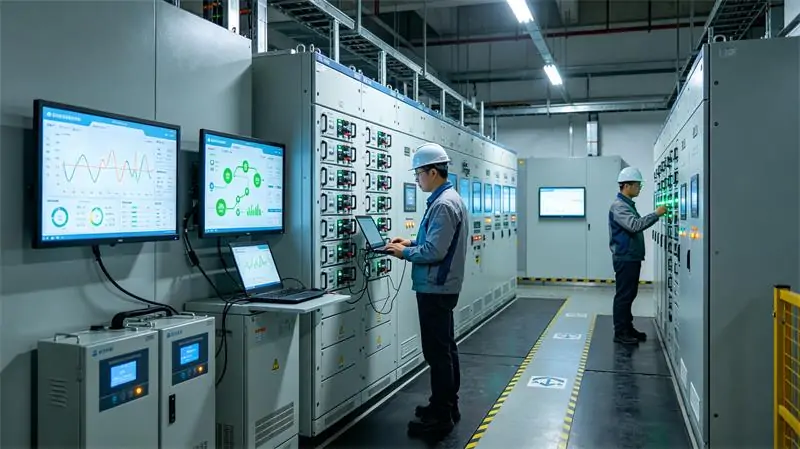
power quality is no longer an optional improvement — it has become a critical requirement for system reliability, energy efficiency, and operational continuity.From artificial intelligence data centers and semiconductor factories to solar farms and automated manufacturing plants, modern electrical systems are becoming more sensitive, more dynamic, and more dependent on stable power conditions.A few decades ago, traditional capacitor banks and passive filters could solve many electrical problems. However, today’s nonlinear loads, inverter-based systems, electric vehicle infrastructure, and renewable energy sources create much more complex challenges:
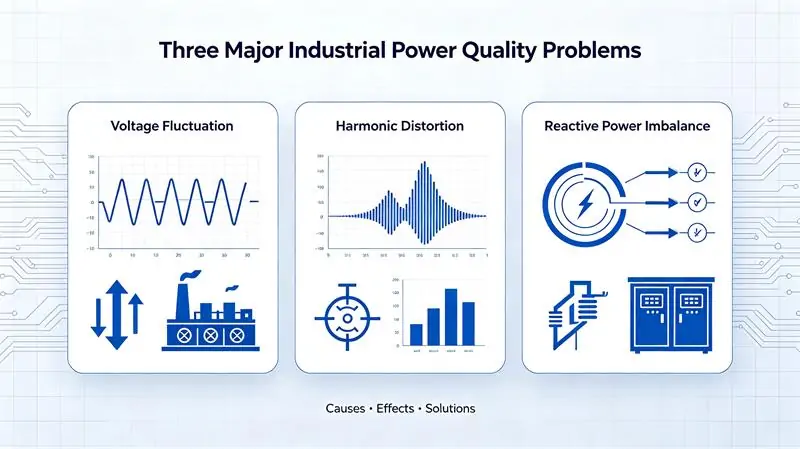
- Rapid reactive power fluctuations
- High-frequency harmonic distortion
- Three-phase current imbalance
- Voltage fluctuation and instability
- Unexpected equipment downtime
This is exactly where advanced power quality solutions from GEYA become essential.
GEYA’s modern power quality equipment combines advanced power electronics, intelligent control algorithms, and high-speed compensation technology to help industrial customers build cleaner, more stable, and more efficient electrical systems.
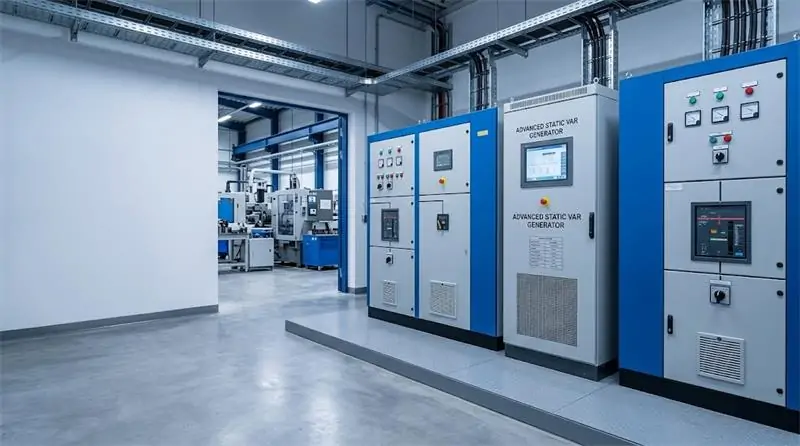
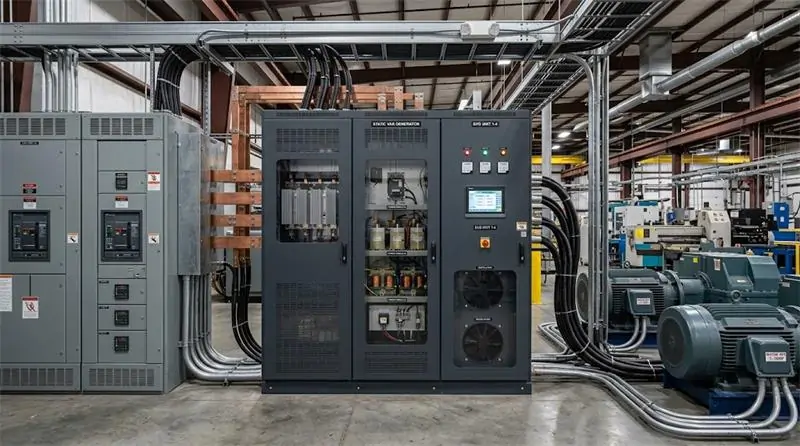
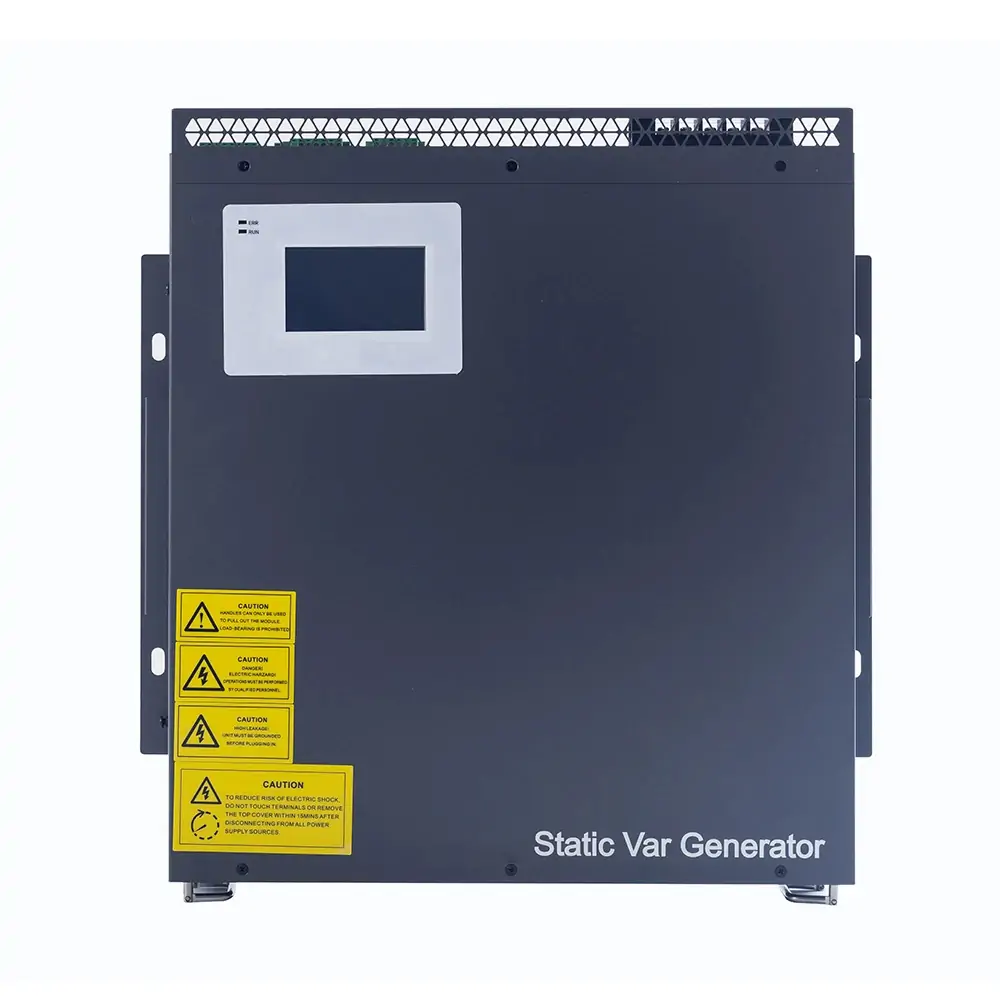
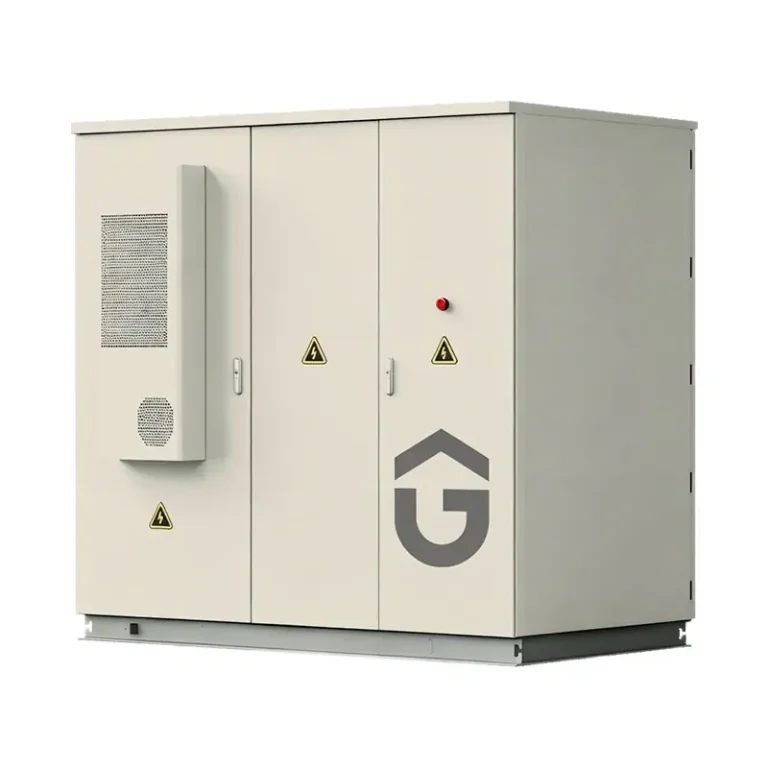
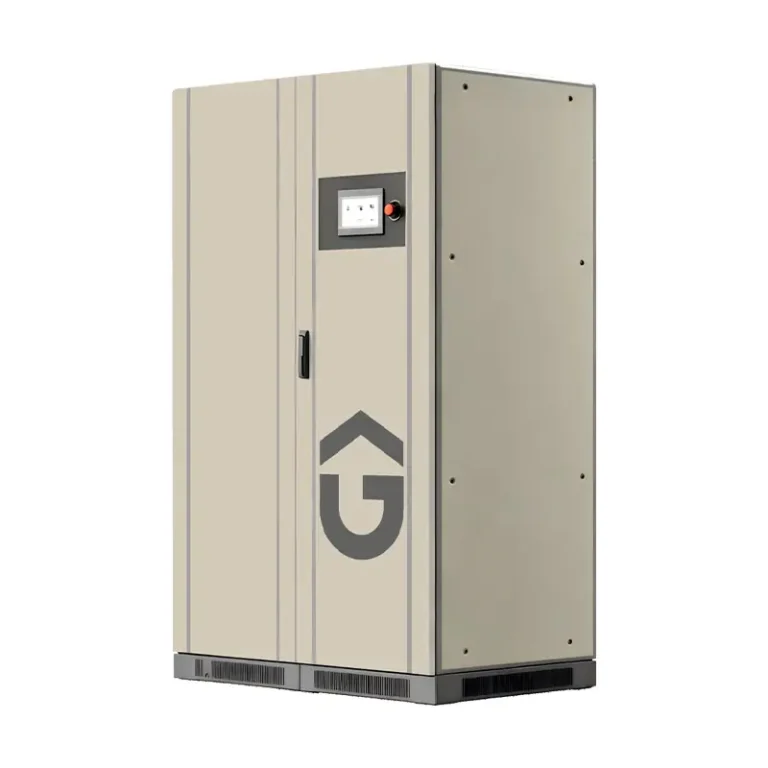
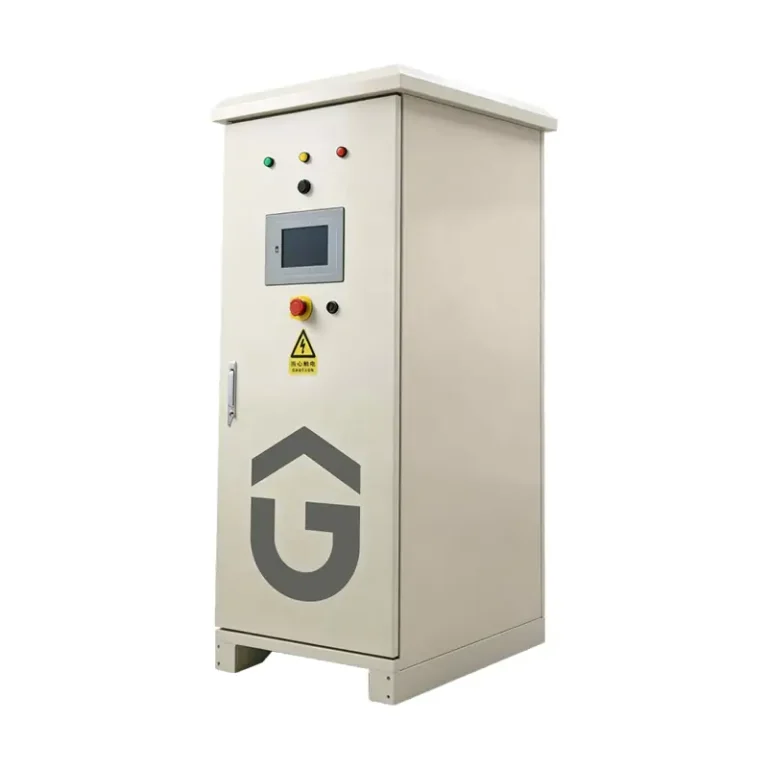
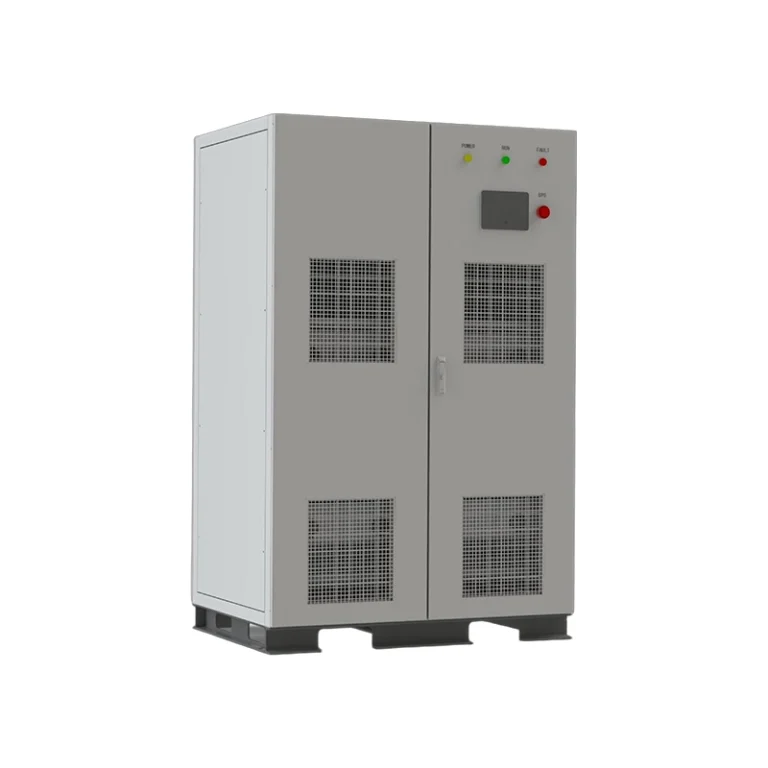
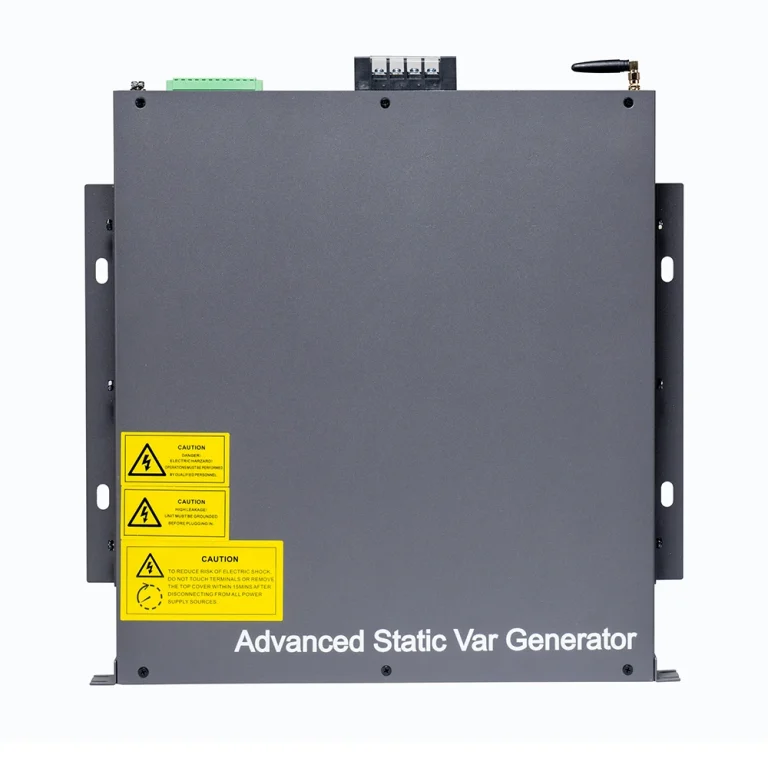
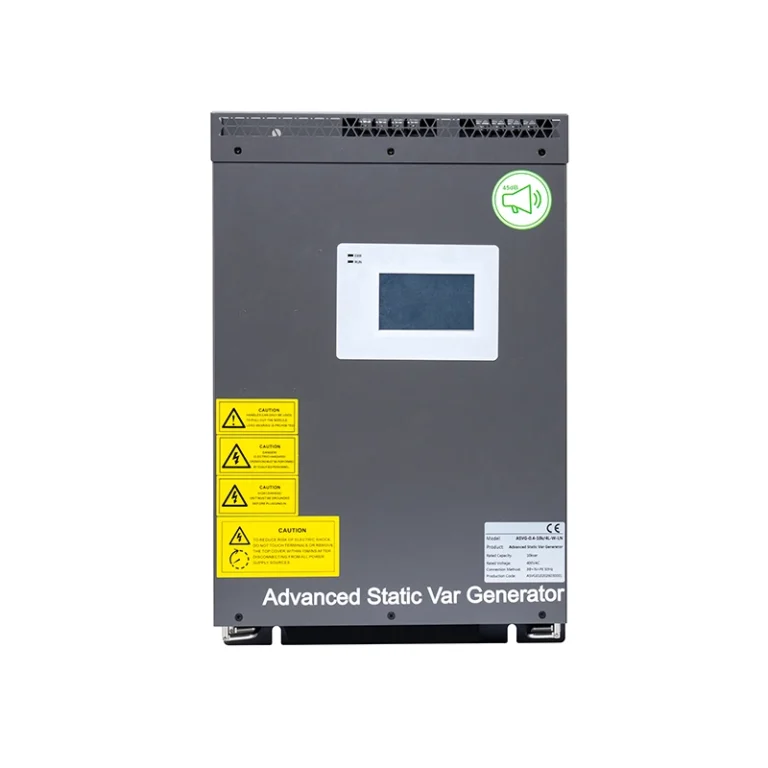
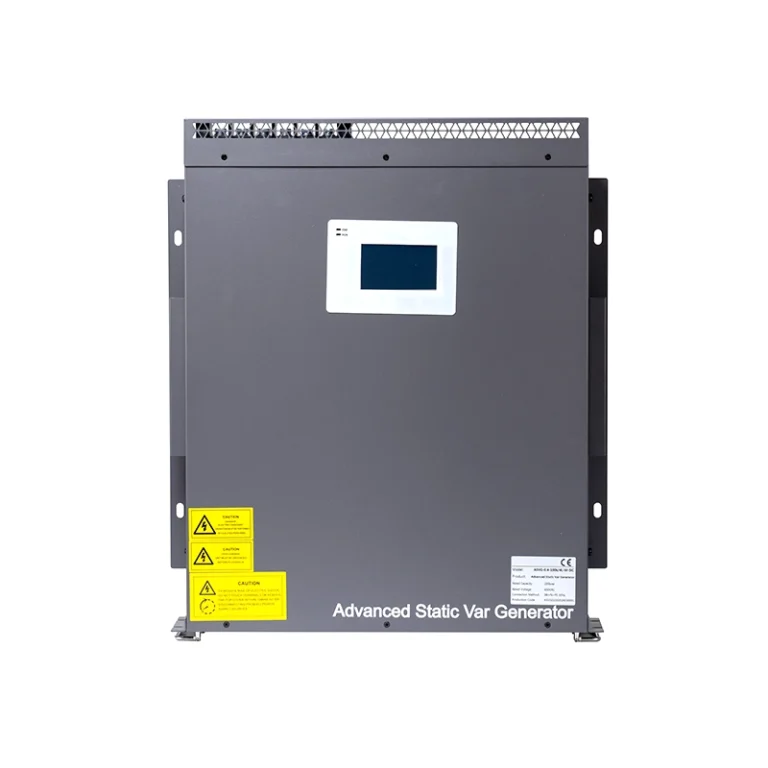
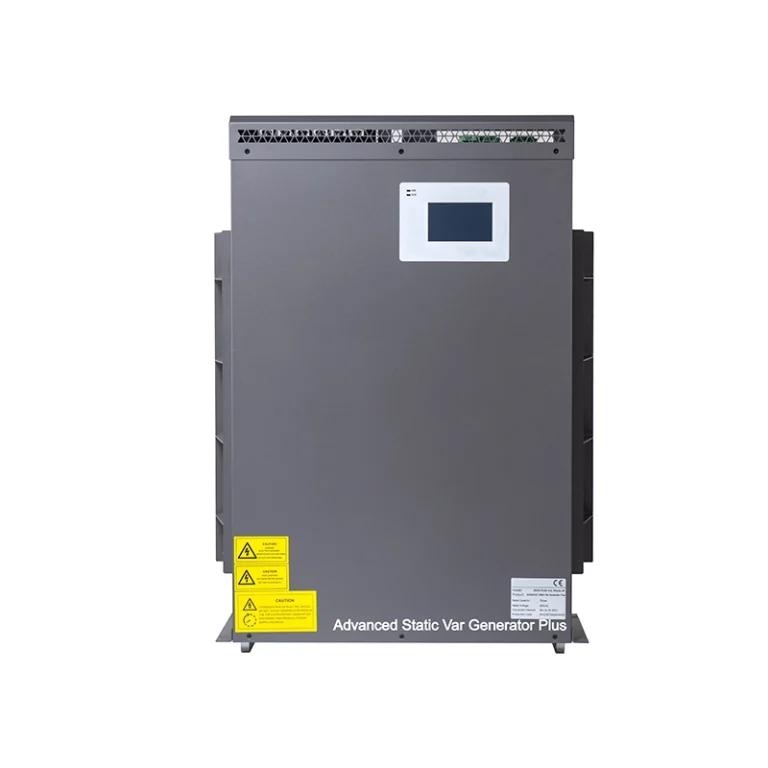
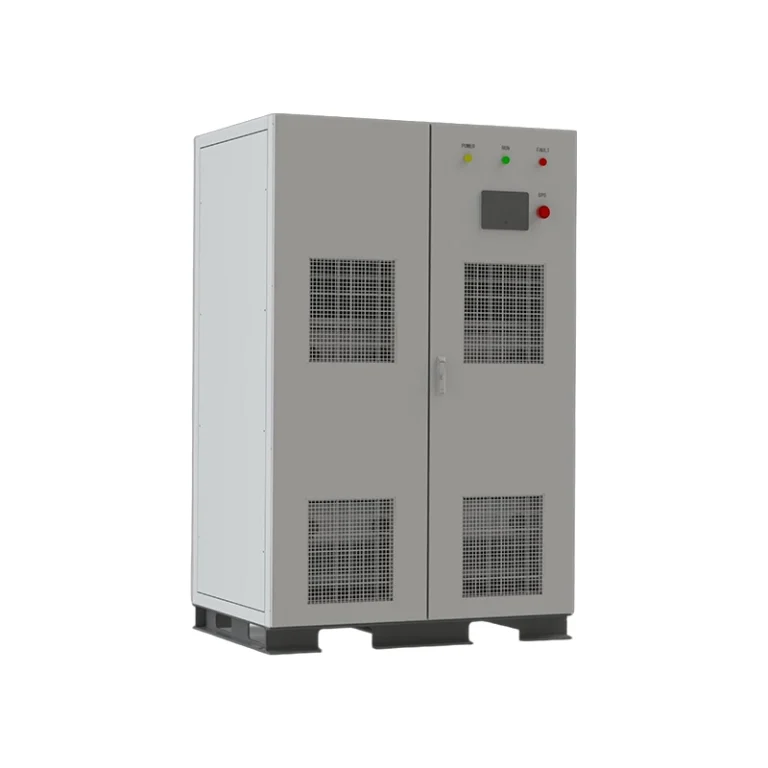
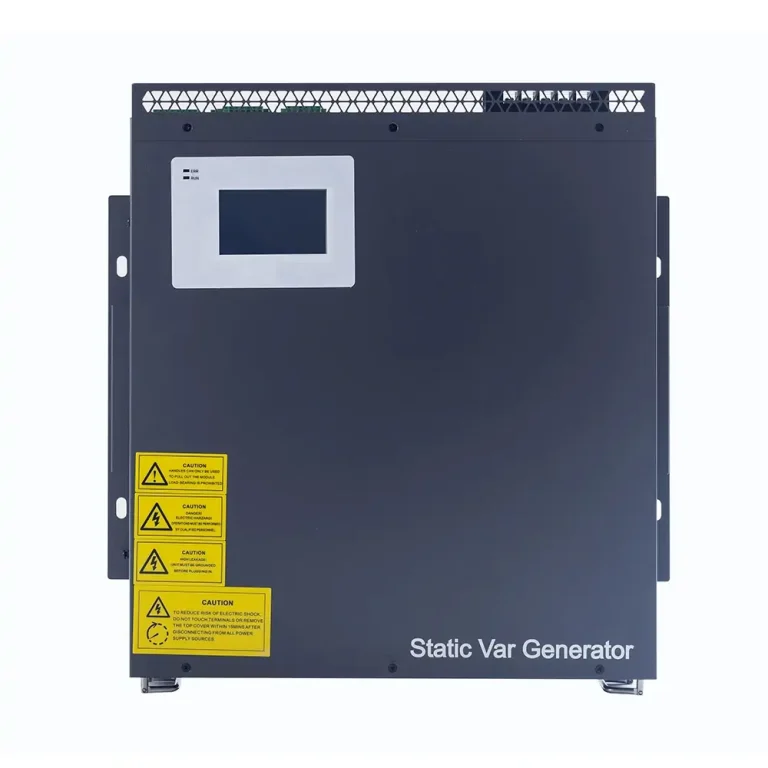
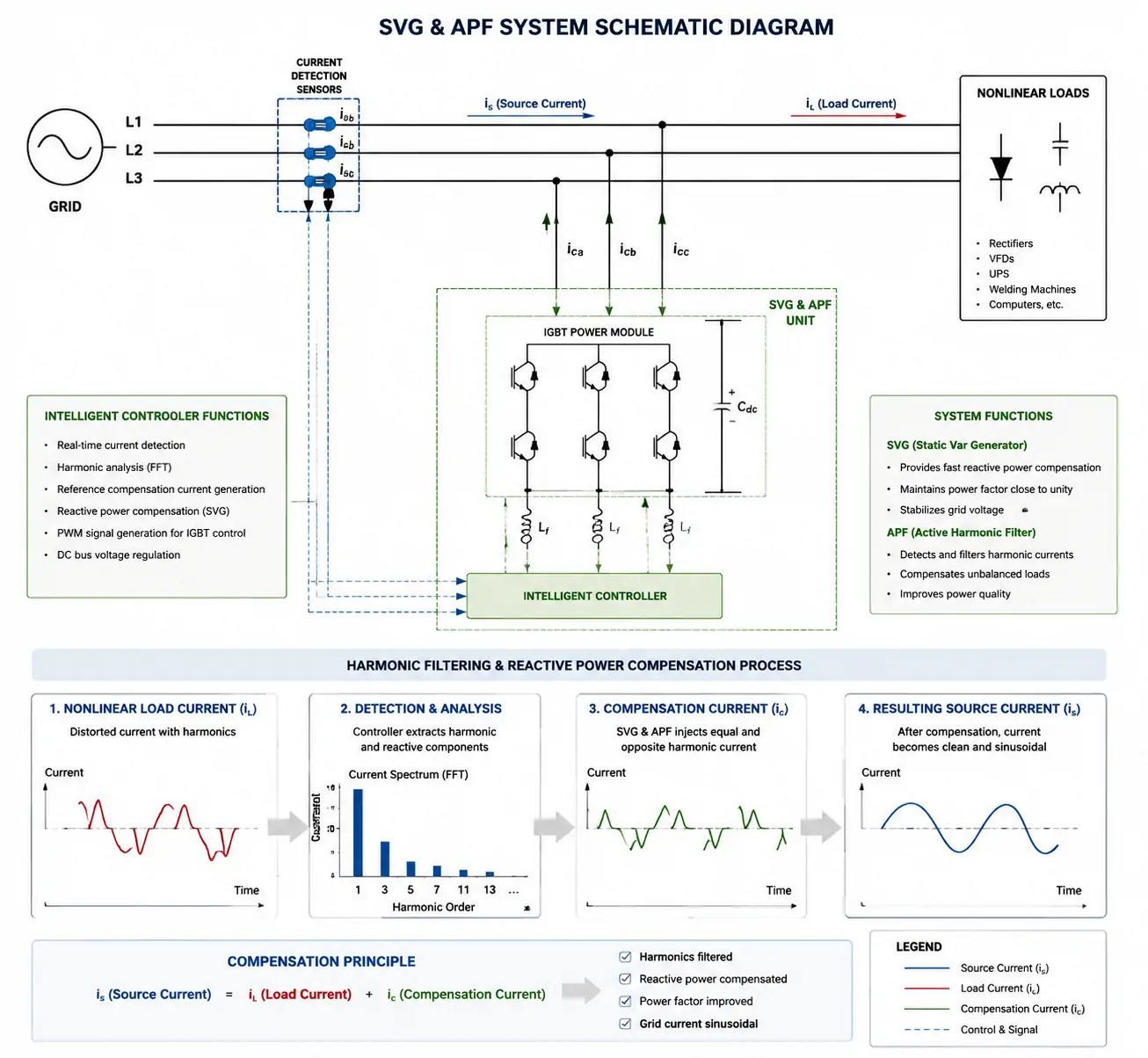
For example, GEYA’s SVG solutions provide dynamic reactive power compensation, power factor improvement, and three-phase load balancing with fast dynamic response capability response capability, making them suitable for demanding applications including manufacturing plants, renewable energy projects, EV charging infrastructure, and data centers.
Why GEYA Power Quality Solutions Are Becoming Essential for Modern Electrical Systems
In my engineering experience, the biggest mistake many companies make is treating power quality problems only after failures occur.
A transformer overheating, a production line suddenly stopping, or sensitive equipment experiencing repeated faults are usually not isolated incidents. They are often symptoms of deeper electrical quality issues.
A professional power quality strategy should identify problems before they become expensive failures.
1. Protecting Critical Industrial Equipment
Modern factories rely heavily on:
- Variable frequency drives (VFDs)
- Robotic automation systems
- Precision manufacturing equipment
- Industrial control systems
- High-power inverter systems
These devices require stable voltage and clean current waveforms.
Even small disturbances can create production interruptions, quality defects, or equipment lifetime reduction.
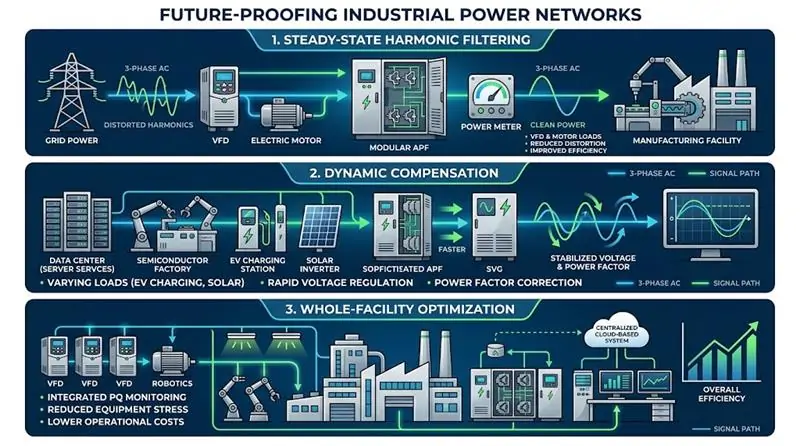
GEYA’s power quality solutions help maintain stable electrical conditions by compensating reactive power, reducing harmonic pollution, and improving grid compatibility.
2. Improving Energy Efficiency and Reducing Operating Costs
Energy efficiency is becoming one of the highest priorities for industrial companies worldwide.
Poor power quality increases:
- Transformer losses
- Cable heating
- Motor inefficiency
- Energy consumption
- Utility penalties caused by low power factor
Dynamic compensation technologies such as SVG can continuously adjust reactive current demand instead of relying on traditional step-controlled compensation methods.
This allows companies to optimize electrical capacity and improve the overall efficiency of their power infrastructure.
3. Supporting Renewable Energy and Smart Grid Development
The global transition toward renewable energy has introduced new electrical challenges.
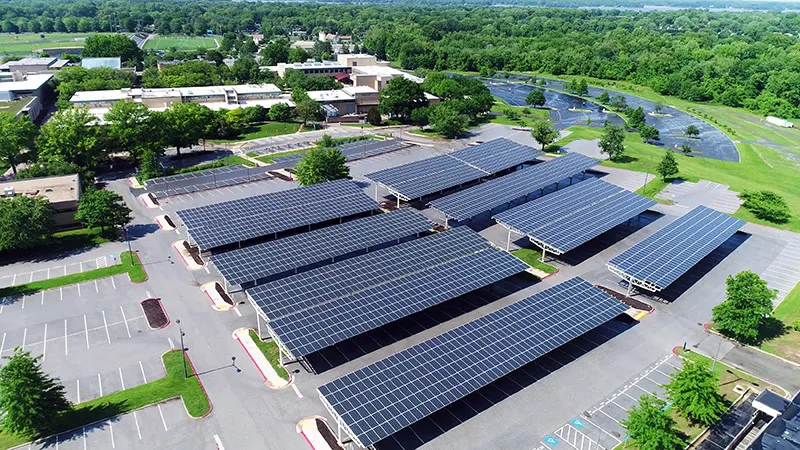
Solar photovoltaic plants, battery energy storage systems, and distributed energy resources often contain power converters that can influence grid stability.
Therefore, modern renewable energy projects increasingly require advanced power quality management solutions.
GEYA engineers design solutions that support renewable energy applications by addressing:
- Reactive power control
- Grid voltage stability
- Harmonic suppression
- Power factor optimization
- Dynamic load changes
My Engineering Prediction: The Power Quality Market Will Enter a New Intelligent Era in 2026
Based on current industrial trends, I believe 2026 will become a turning point for power quality management.
The market will move from traditional “problem correction” toward intelligent “preventive electrical management.”
Companies will no longer ask:
“How can we fix electrical problems after they happen?”
Instead, they will ask:
“How can we build an electrical system that prevents problems before they happen?”
This change will accelerate the adoption of advanced solutions including SVG, APF, ASVG, AVC, intelligent monitoring platforms, and hybrid power quality systems.
2026 Power Quality Technology Direction Preview
In the following sections, I will reveal my predicted:
- Top 10 Power Quality Solutions for 2026
- Recommended GEYA equipment combinations for different industries
- The engineering differences between IGBT and thyristor technologies
- Professional maintenance methods to extend equipment lifetime
As an engineer, my recommendation is simple:
do not wait until electrical problems stop your business. Build a smarter power quality strategy today.
Continue reading:
“Top 10 Power Quality Solutions That Will Dominate 2026”
Top 10 Power Quality Solutions That Will Dominate 2026
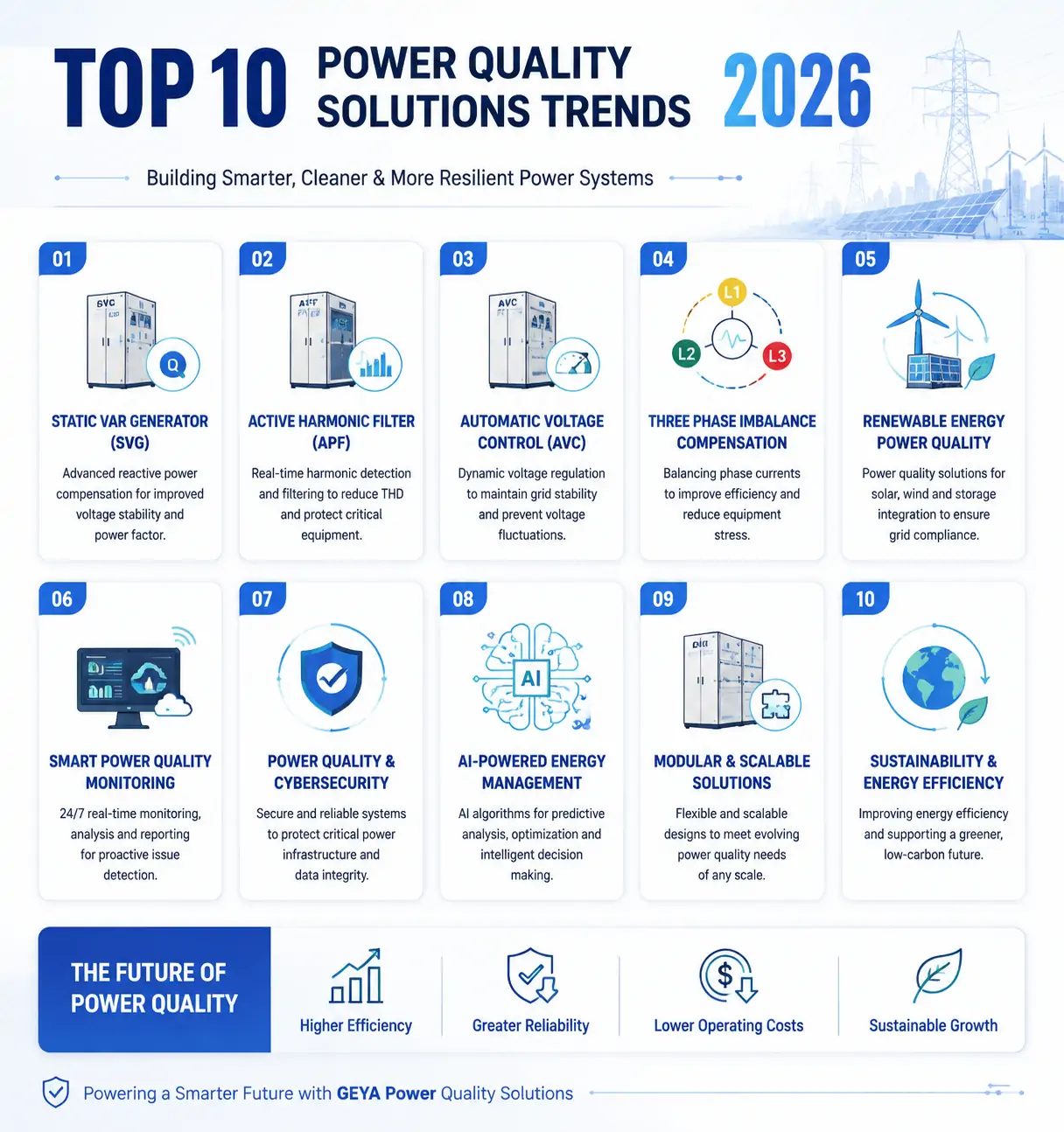
After analyzing global industrial electrification trends, renewable energy development, and customer requirements across different markets, I believe the following ten power quality solutions will become the most important technologies in 2026.
These solutions are not simply equipment upgrades. They represent a complete transformation from traditional electrical correction toward intelligent power quality management.
1. Intelligent Static Var Generator (SVG) for Dynamic Reactive Power Compensation
Reactive power management remains one of the most important challenges in modern electrical systems.
Traditional capacitor banks often struggle with rapidly changing loads because their response speed is limited and compensation steps are not continuous.
In 2026, intelligent SVG systems will become the preferred solution for industries requiring fast and accurate reactive power control.
GEYA SVG technology uses advanced power electronics to dynamically generate or absorb reactive current, helping maintain:
- High power factor
- Stable voltage conditions
- Reduced transmission losses
- Improved transformer capacity utilization
- Lower electricity penalties
Recommended applications:
- Large manufacturing plants
- Data centers
- Renewable energy stations
- Steel and chemical industries
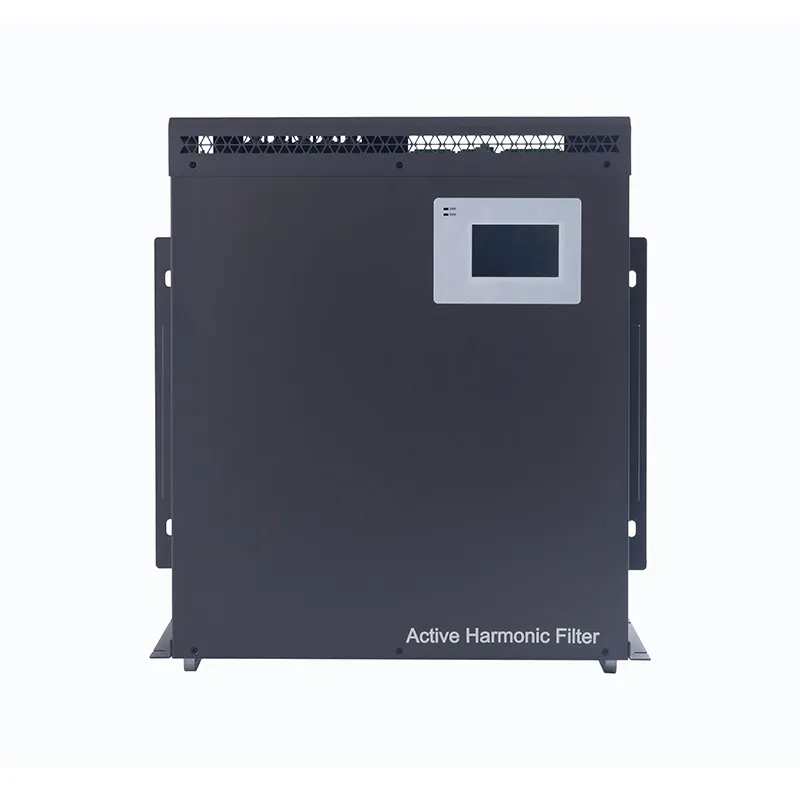
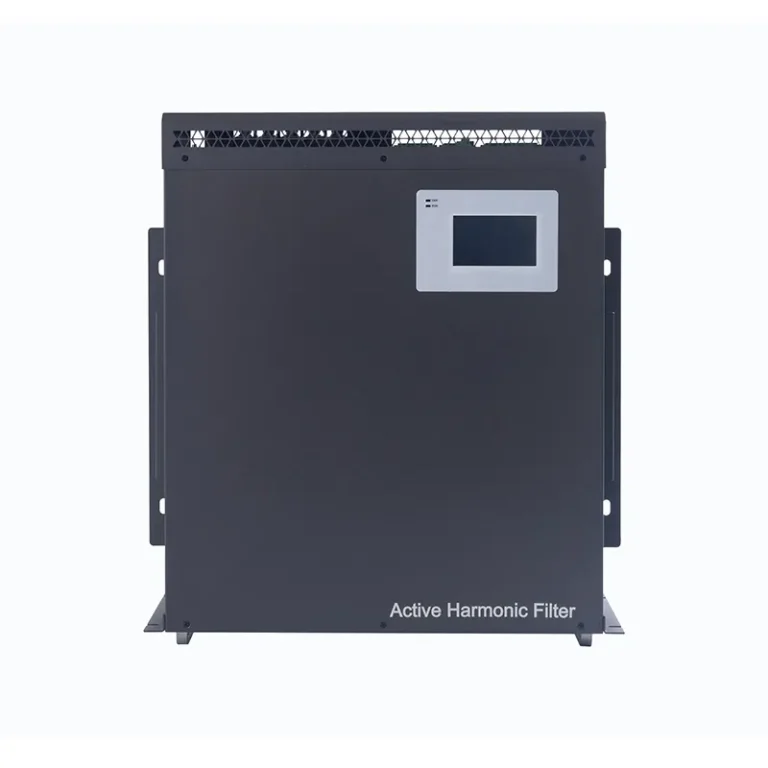
2. Active Harmonic Filter (AHF) for Advanced Harmonic Mitigation
The growth of power electronic equipment has created a new generation of harmonic problems.
Modern facilities contain thousands of nonlinear loads including:
- Variable frequency drives
- UPS systems
- Solar inverters
- Battery chargers
- LED lighting systems
These devices generate harmonic currents that can cause overheating, measurement errors, communication interference, and equipment malfunction.
Active Harmonic Filters will become one of the fastest-growing power quality technologies in 2026 because they can identify and eliminate harmonic distortion dynamically.
Compared with passive filters, AHF provides:
- Wide harmonic compensation range
- Real-time response
- Flexible installation
- Better performance under variable loads
Recommended applications:
- Semiconductor factories
- Hospitals
- Commercial buildings
- Automation production lines
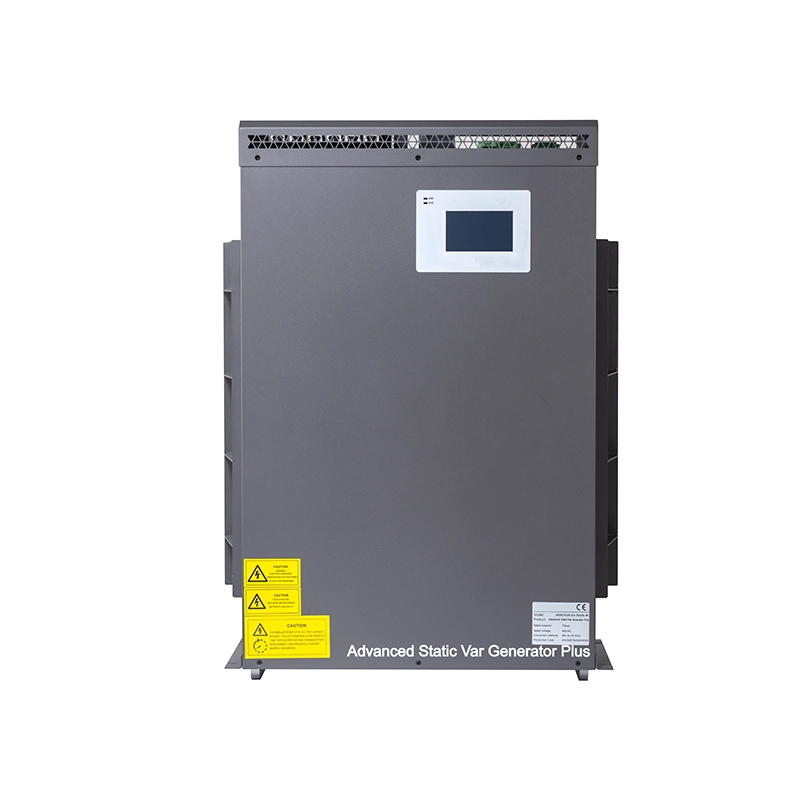
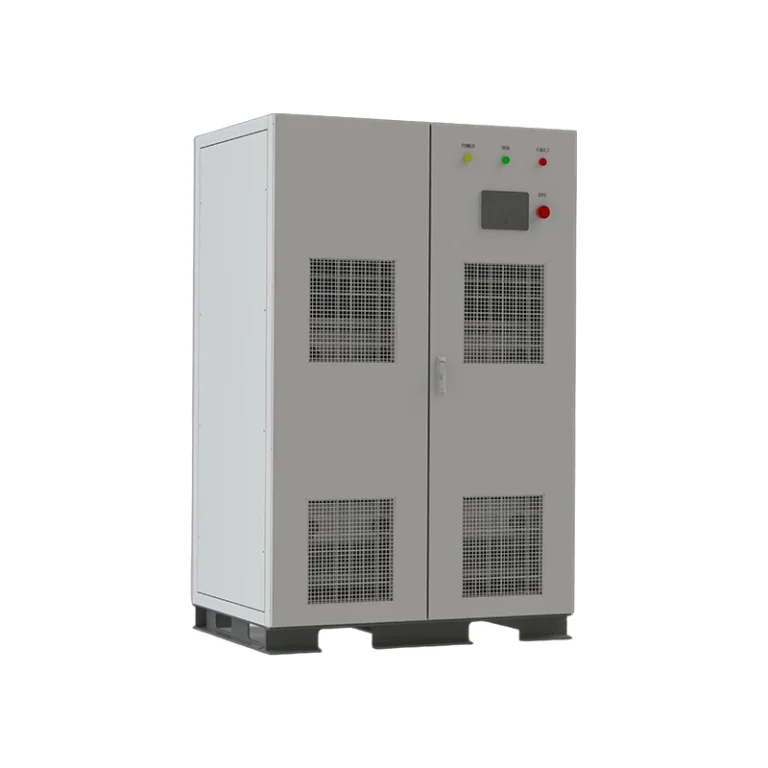
3. Advanced SVG (ASVG) for Comprehensive Power Quality Control
The next generation of SVG technology will move beyond simple reactive compensation.
Advanced SVG solutions combine multiple functions:
- Reactive power compensation
- Harmonic reduction
- Three-phase current balancing
- Voltage stability improvement
For customers looking for a complete power quality solution with fewer devices, ASVG technology provides a highly integrated approach.
From an engineering perspective, integrated solutions reduce:
- System complexity
- Installation cost
- Maintenance requirements
- Control coordination challenges
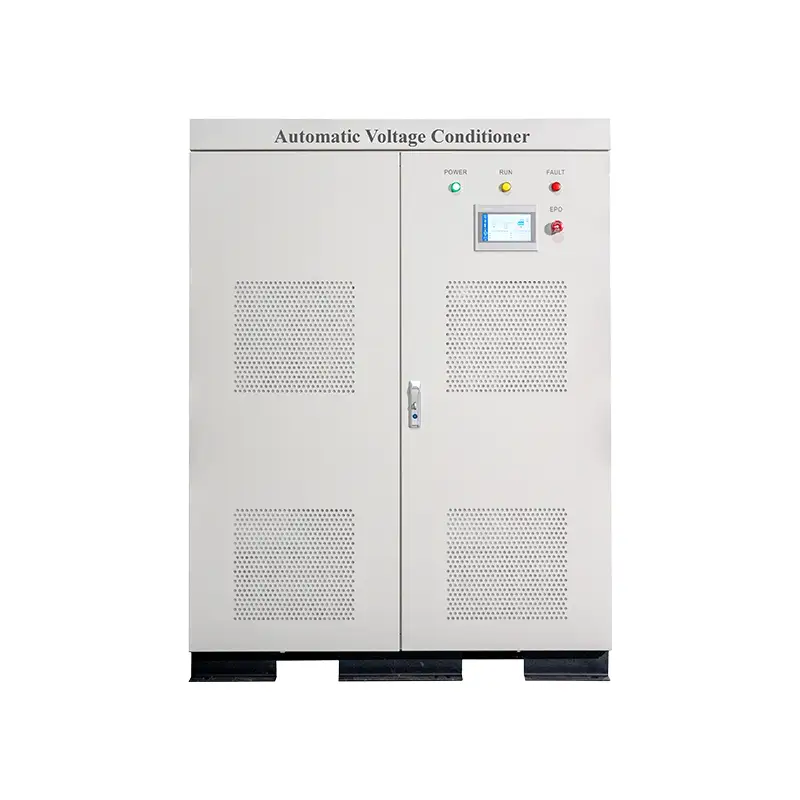
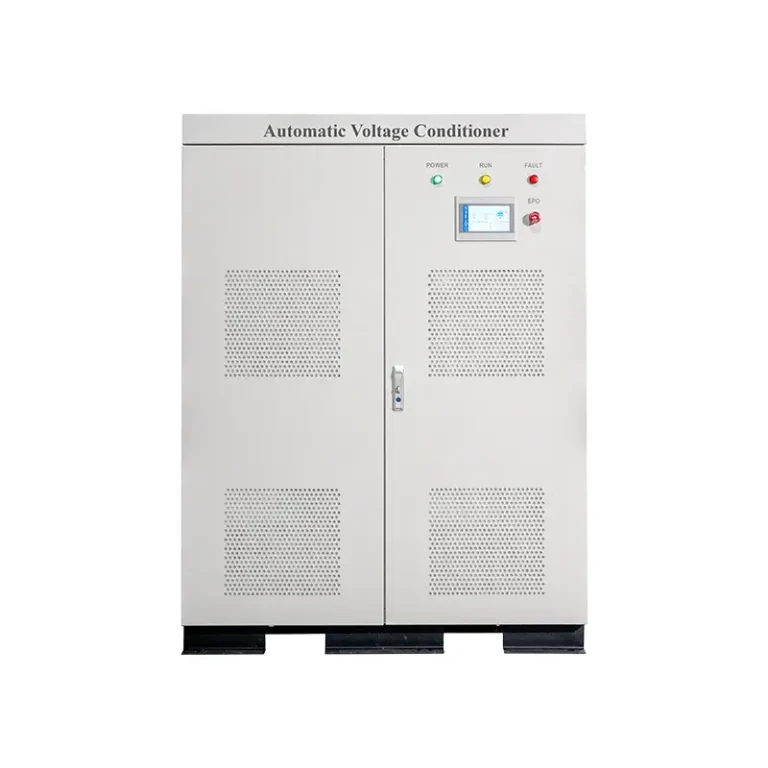
4. Automatic Voltage Control (AVC) for Voltage Stability Management
Voltage fluctuation is becoming increasingly common due to renewable energy penetration and rapidly changing industrial loads.
Automatic Voltage Control systems help maintain voltage within acceptable limits by continuously monitoring electrical conditions and adjusting compensation strategies.
AVC solutions are especially valuable for:
- Solar power plants
- Wind energy projects
- Remote industrial facilities
- Utility-scale electrical networks
Stable voltage means higher equipment reliability and fewer unexpected shutdowns.
5. Three-Phase Unbalance Compensation Technology
Three-phase imbalance is often underestimated, but it can significantly reduce electrical system efficiency.
Unequal phase loading can lead to:
- Motor overheating
- Transformer losses
- Reduced equipment lifetime
- Voltage instability
In 2026, three-phase unbalance compensation will become a standard requirement for many industrial applications.
GEYA solutions can dynamically redistribute compensation currents to improve phase balance and optimize system performance.
Recommended applications:
- Manufacturing facilities
- Mining operations
- Charging stations
- Commercial buildings with uneven loads
6. Smart Power Quality Monitoring and Energy Management Platforms
The future of power quality is not only about correction — it is also about visibility.
Smart monitoring platforms allow engineers to understand:
- Where problems occur
- When disturbances happen
- Which equipment creates electrical pollution
- How compensation devices perform
Combining monitoring with GEYA compensation equipment enables predictive maintenance and smarter energy management.
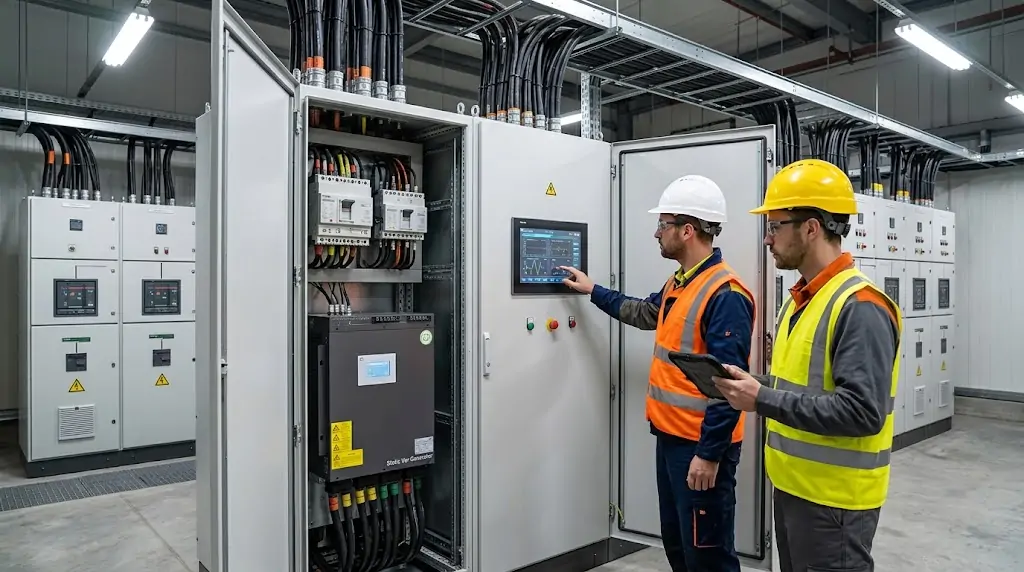
7. Renewable Energy Power Quality Solutions for Solar and Storage Systems
The renewable energy revolution is changing the structure of electrical networks.
Solar farms and battery storage systems require advanced power quality technologies to maintain grid compatibility.
Future renewable projects will increasingly combine:
- SVG compensation
- Voltage regulation
- Harmonic filtering
- Intelligent monitoring
8. Data Center Power Quality Management Solutions
Data centers represent one of the most demanding power quality environments.
Artificial intelligence computing, cloud services, and high-density servers require extremely stable electrical conditions.
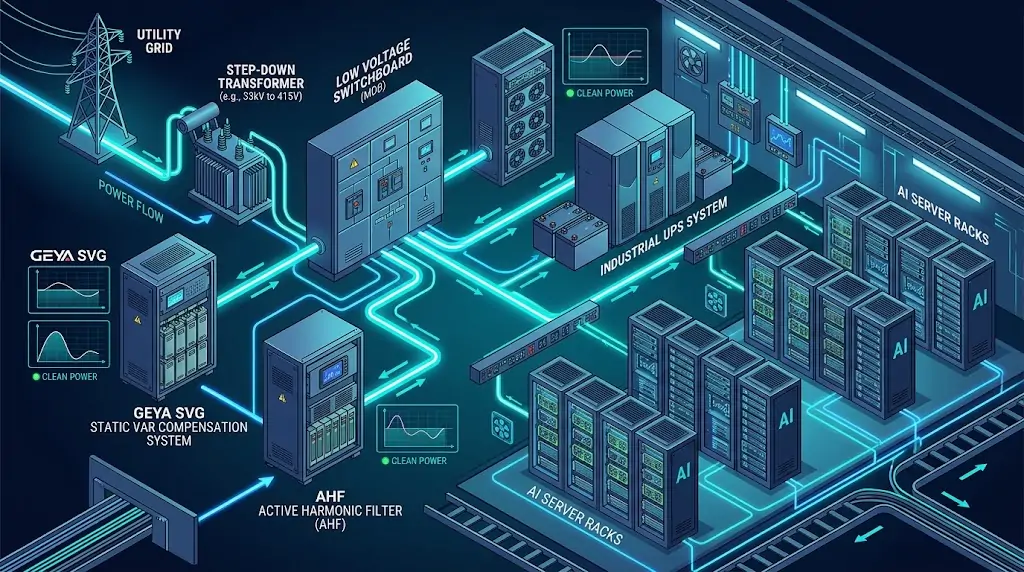
For data center customers, my recommended GEYA configuration includes:
- SVG for reactive compensation
- AHF for harmonic control
- Advanced monitoring systems
- Backup power quality protection strategy
The objective is simple:
zero unnecessary downtime and maximum electrical reliability.
9. Industrial Hybrid Power Quality Compensation Systems
Large factories often experience multiple power quality problems simultaneously.
A single technology may not solve every challenge.
Therefore, hybrid solutions combining:
- SVG
- APF
- AVC
- Monitoring systems
will become increasingly popular among advanced industrial users.
10. AI-Based Predictive Power Quality Management
Artificial intelligence will play a larger role in electrical management.
Future systems will analyze historical operating data to predict:
- Potential harmonic problems
- Equipment stress conditions
- Maintenance requirements
- Energy optimization opportunities
The combination of AI analytics and intelligent compensation equipment will define the next generation of power quality management.
Expert Selection Guide: How to Choose the Right GEYA Power Quality Solution for Different Applications
One of the most important lessons I have learned throughout my engineering career is that there is no universal power quality solution.
The correct equipment selection depends on:
- Load characteristics
- Electrical disturbance type
- System capacity
- Future expansion requirements
- Reliability expectations
Below are my professional recommendations for three major industrial application scenarios.
1. Data Centers: Maximum Stability and Zero Downtime Strategy
Data centers are among the most sensitive electrical environments today.
The rapid growth of artificial intelligence computing and cloud infrastructure has increased power density while reducing tolerance for electrical disturbances.
For data center projects, I recommend a combination of:
| Requirement | Recommended GEYA Solution |
|---|---|
| Reactive power management | SVG Static Var Generator |
| Harmonic suppression | Active Harmonic Filter (AHF) |
| Electrical visibility | Smart Power Quality Monitoring System |
| Long-term reliability | Integrated power quality management platform |
My engineering recommendation:
For mission-critical facilities, power quality equipment should be considered part of the infrastructure, not an optional accessory.
2. Solar PV Plants: Improving Grid Compatibility and Energy Output
Renewable energy systems create new challenges because inverter-based generation behaves differently from traditional generators.
Solar projects commonly require:
- Reactive power regulation
- Voltage stabilization
- Grid code compliance
- Harmonic control
Recommended GEYA configuration:
- SVG system for dynamic reactive compensation
- AVC system for voltage control
- Power quality monitoring for grid analysis
This combination helps photovoltaic plants achieve better grid performance and improve long-term operational reliability.
3. Manufacturing Plants: Protecting Production Efficiency
Modern factories contain many nonlinear and rapidly changing loads:
- Robotic systems
- CNC machines
- Variable speed drives
- Welding equipment
- Automation controllers
These loads frequently create:
- Voltage fluctuations
- Harmonic distortion
- Power factor problems
- Phase imbalance
For manufacturing customers, my recommended solution is:
- SVG for reactive compensation
- APF for harmonic elimination
- Three-phase unbalance compensation technology
Technical Insight: IGBT vs Thyristor — How Engineers Choose the Right Power Semiconductor
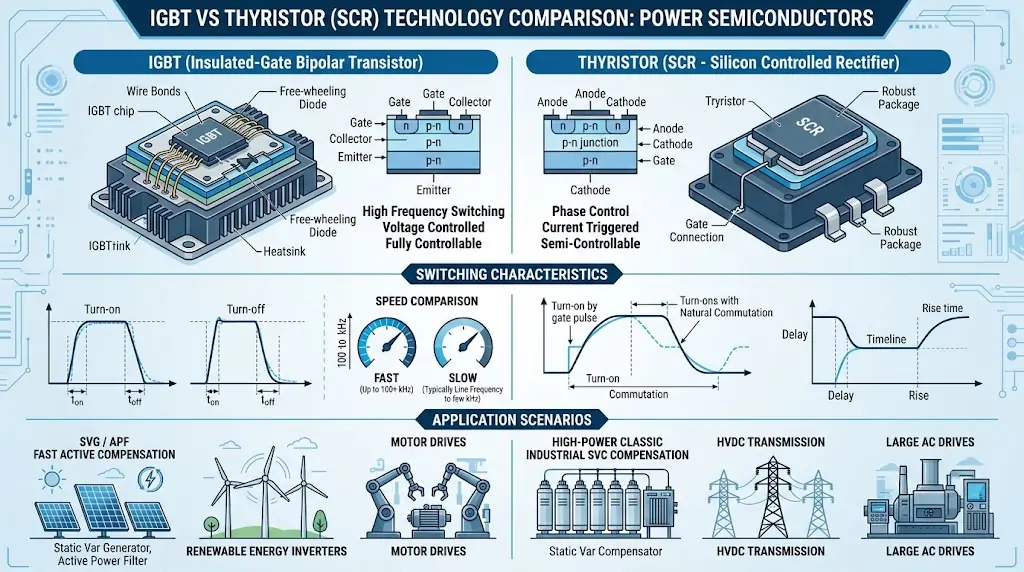
The semiconductor device inside power quality equipment directly affects response speed, efficiency, reliability, and application suitability.
GEYA utilizes advanced power electronic technologies including IGBT-based and thyristor-based solutions depending on different application requirements.
IGBT Technology: The Preferred Choice for Fast Dynamic Compensation
IGBT (Insulated Gate Bipolar Transistor) technology has become the core component of modern active power quality equipment.
Its advantages include:
- Extremely fast switching speed
- Precise current control
- High compensation accuracy
- Excellent dynamic response
- Compact equipment design
For applications with rapidly changing loads, such as:
- Data centers
- Industrial automation
- EV charging stations
- Renewable energy systems
I generally recommend IGBT-based solutions.
Thyristor Technology: Reliable Solution for High-Power Applications
Thyristors have been widely used in industrial power systems for decades.
Their major advantages are:
- High voltage capability
- Strong overload resistance
- Long operational lifetime
- Excellent cost efficiency for large power systems
For applications requiring stable and high-capacity switching, thyristor technology remains a valuable engineering choice.
My professional selection principle:
| Application Requirement | Recommended Technology |
|---|---|
| Fast dynamic compensation | IGBT |
| High-power traditional compensation | Thyristor |
| Precision power quality management | IGBT-based SVG/APF |
| Large-scale industrial compensation | Hybrid solutions |
Exclusive Maintenance Tips: How to Keep GEYA Power Quality Equipment Performing at Its Best
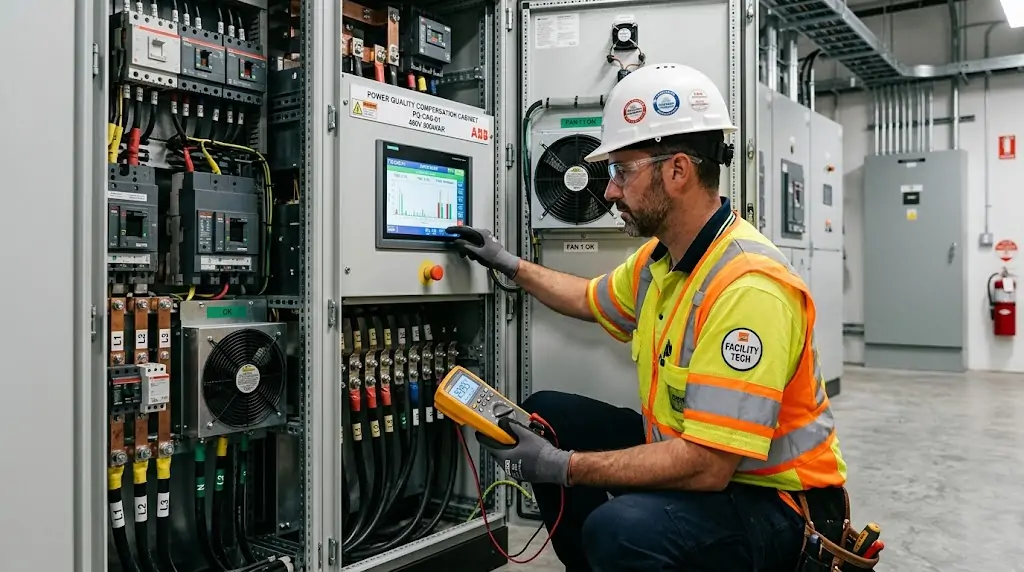
Advanced equipment requires professional maintenance.
However, based on my engineering experience, many failures can be prevented through simple daily management practices.
1. Maintain a Clean Installation Environment
Dust, humidity, and excessive temperature are major enemies of power electronic equipment.
Recommended actions:
- Regularly clean air filters
- Check cooling fans
- Maintain proper ventilation
- Prevent moisture accumulation
2. Monitor Operating Parameters Regularly
Engineers should regularly review:
- Power factor
- Harmonic distortion levels
- Temperature readings
- Load conditions
- Alarm records
Early detection prevents expensive downtime.
3. Perform Preventive Electrical Inspection
Recommended inspection schedule:
- Monthly visual inspection
- Quarterly parameter analysis
- Annual professional maintenance
A well-maintained GEYA power quality system can provide years of reliable operation.
Frequently Asked Questions About GEYA Power Quality Solutions
Q1: Why is power quality important for industrial customers?
Poor power quality can increase energy losses, damage sensitive equipment, reduce production efficiency, and create unexpected downtime. Professional power quality management improves reliability and operational performance.
Q2: What is the difference between SVG and traditional capacitor banks?
Traditional capacitor banks provide step-based compensation, while SVG provides dynamic real-time reactive power adjustment with faster response and higher accuracy.
Q3: Can GEYA SVG solve harmonic problems?
Advanced SVG systems can provide certain harmonic compensation functions. For applications with severe harmonic distortion, combining SVG with Active Harmonic Filter technology is usually recommended.
Q4: Which GEYA solution is suitable for solar power plants?
Solar plants commonly require SVG, AVC, and power quality monitoring solutions to maintain voltage stability, reactive power control, and grid compliance.
Q5: How often should power quality equipment be maintained?
Routine inspection should be performed monthly, detailed electrical analysis quarterly, and professional maintenance annually depending on operating conditions.
Final Engineering Recommendation
The electrical systems of the future will not simply consume energy — they will intelligently manage energy quality.
From renewable energy facilities to advanced manufacturing and AI data centers, power quality will determine operational reliability and competitive advantage.
As a power system engineer, my recommendation to industrial customers is:
“Invest in power quality before problems appear. The most reliable electrical system is the one designed to prevent failures, not only repair them.”
With GEYA’s advanced SVG, AHF, AVC, and intelligent power quality technologies, businesses can achieve higher efficiency, improved reliability, and smarter energy management in 2026 and beyond.
Build Your 2026 Power Quality Strategy with GEYA
Looking for the right power quality solution for your factory, renewable energy project, or critical infrastructure?
Contact GEYA technical experts today for professional system analysis and customized power quality recommendations.