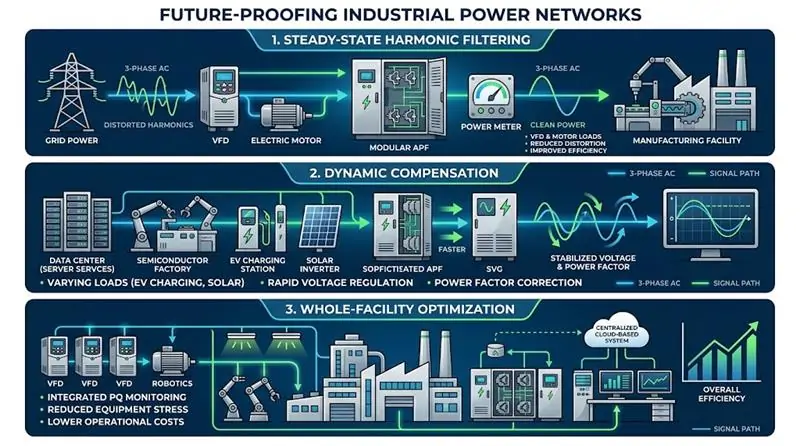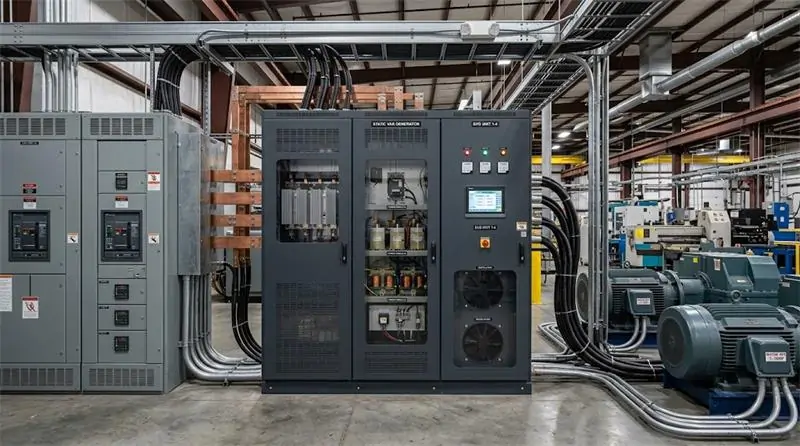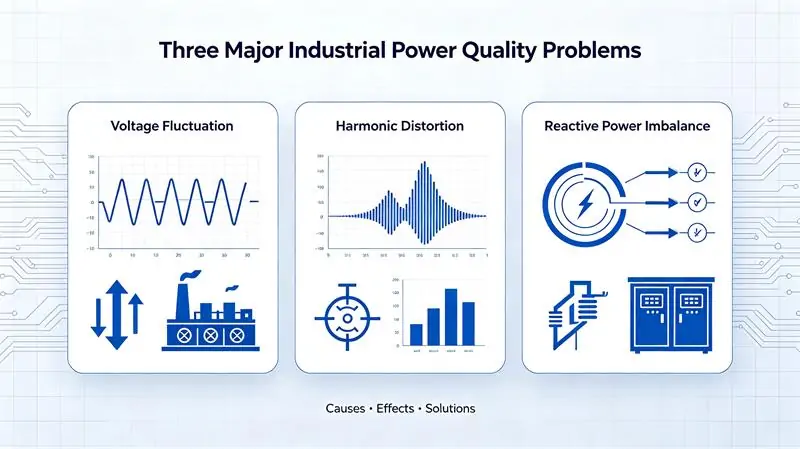
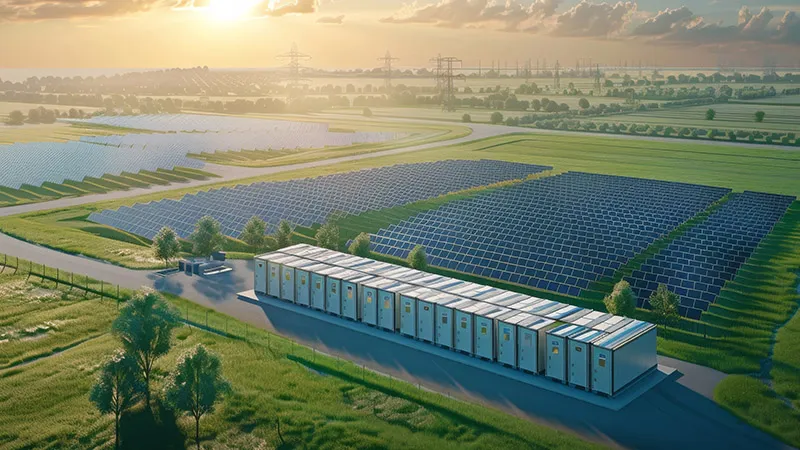
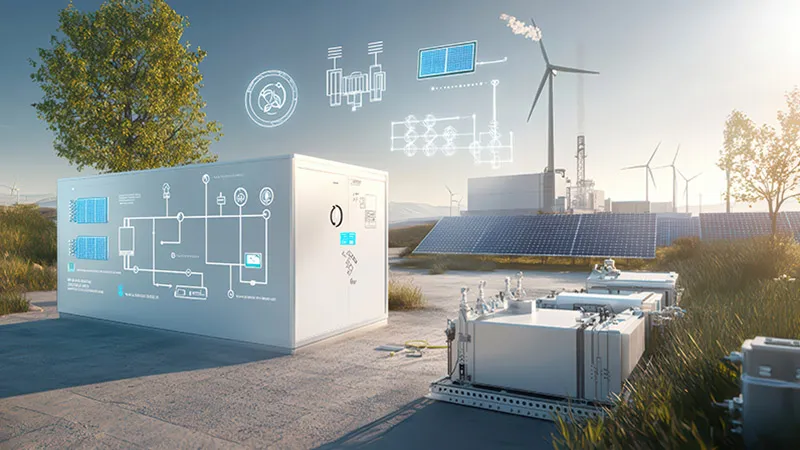
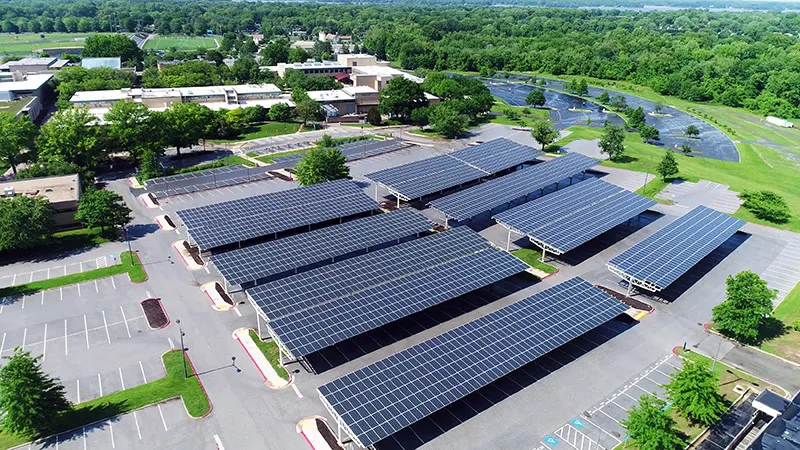


Modern industrial power systems are becoming more dynamic, more distributed, and more sensitive to power quality disturbances. Motors, variable frequency drives, welding equipment, compressors, rectifiers, renewable energy systems, and other nonlinear or rapidly changing loads can create reactive power demand, harmonic currents, and three-phase current imbalance.
For facility engineers, EPC contractors, renewable energy developers, and electrical maintenance teams, these problems are not simply electrical engineering issues. Poor power quality can affect equipment performance, increase electrical losses, reduce usable system capacity, and make it harder to maintain stable operation.
This is where an Advanced Static Var Generator (ASVG) provides a more comprehensive approach.
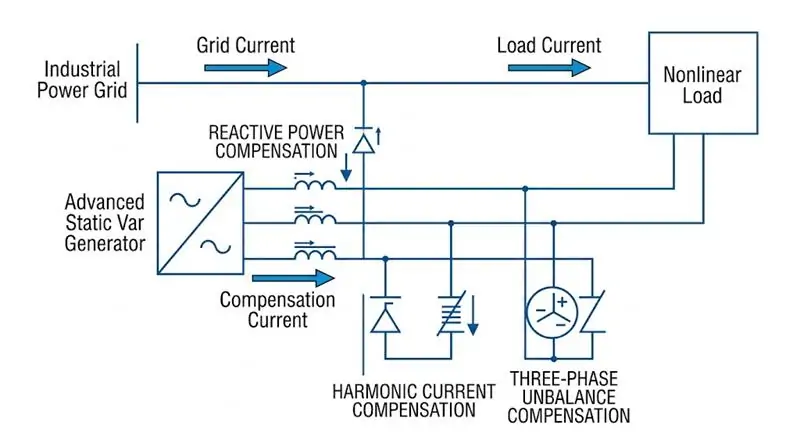
Unlike a conventional reactive power compensation device designed primarily to correct power factor, an ASVG can combine reactive power compensation, harmonic compensation, and three-phase unbalance compensation within one power electronic platform.
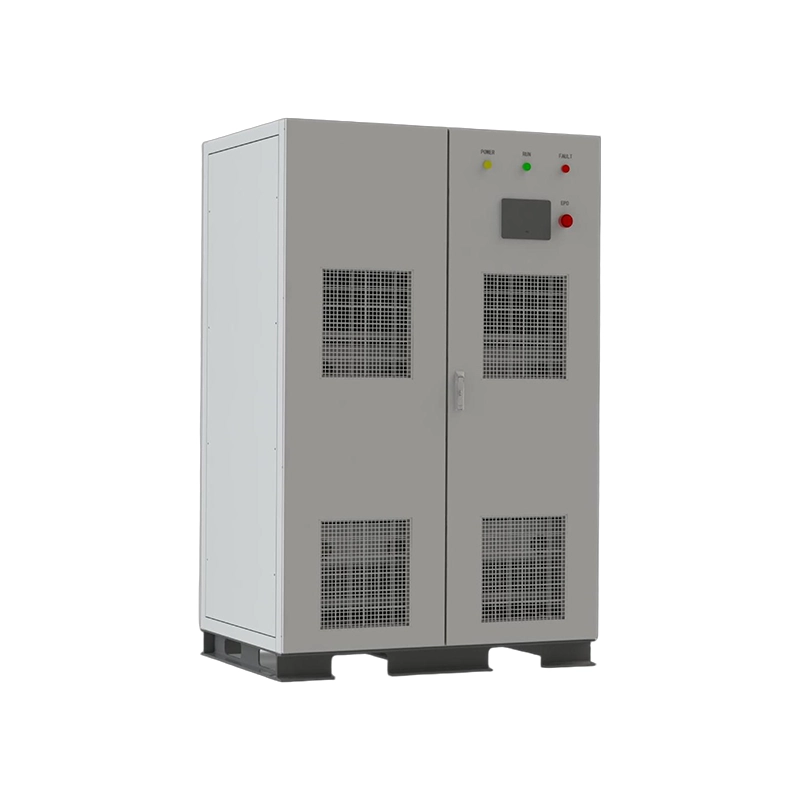
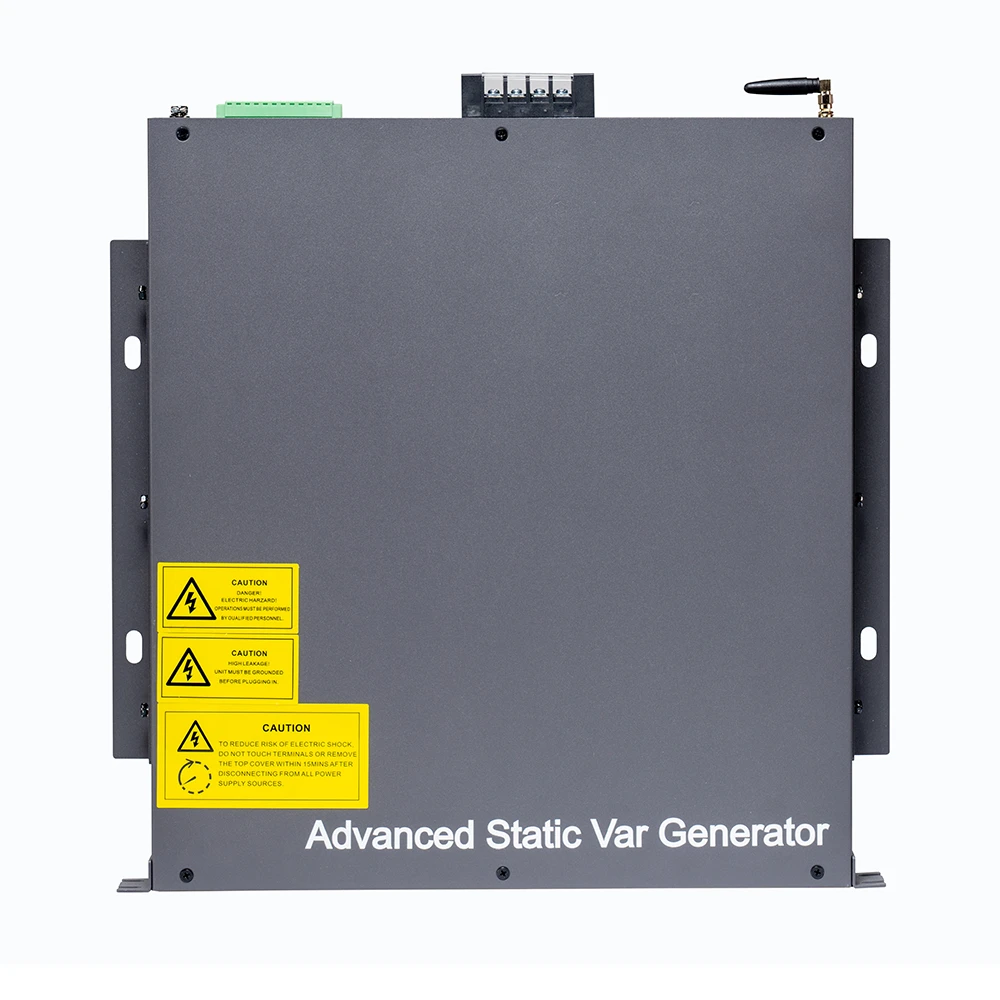
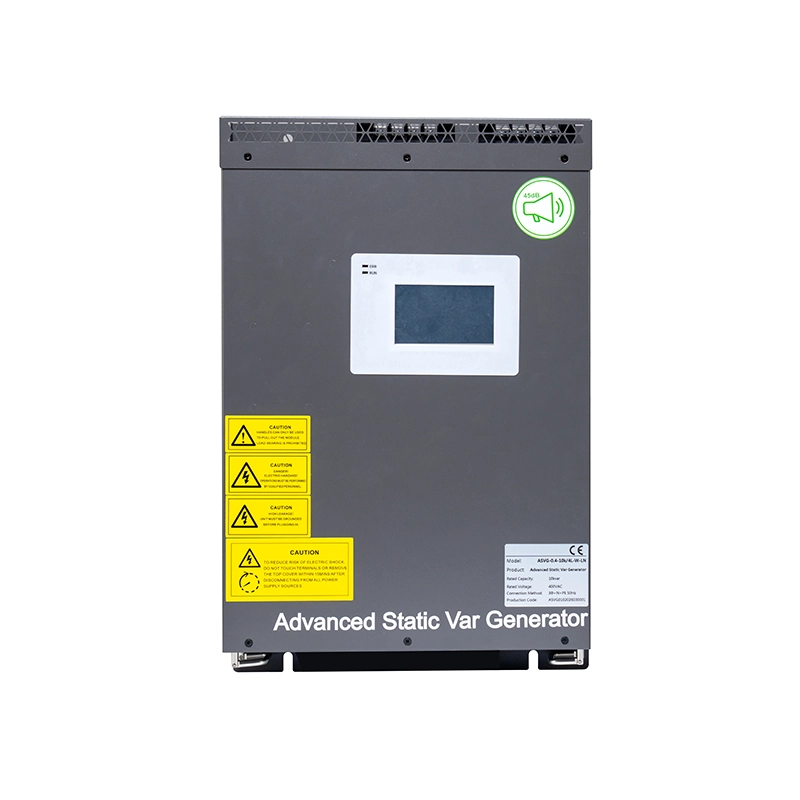
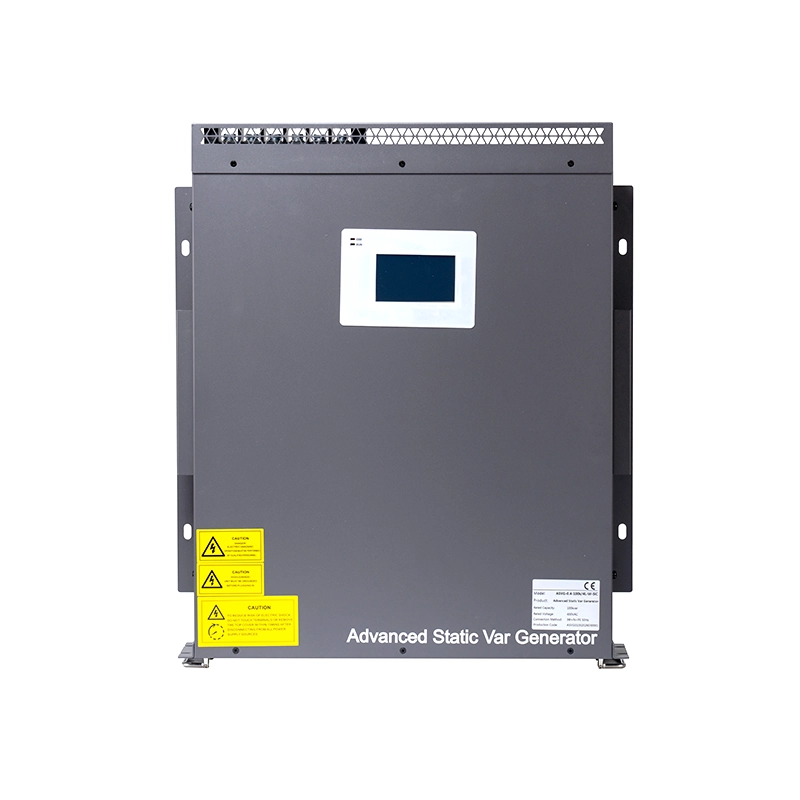
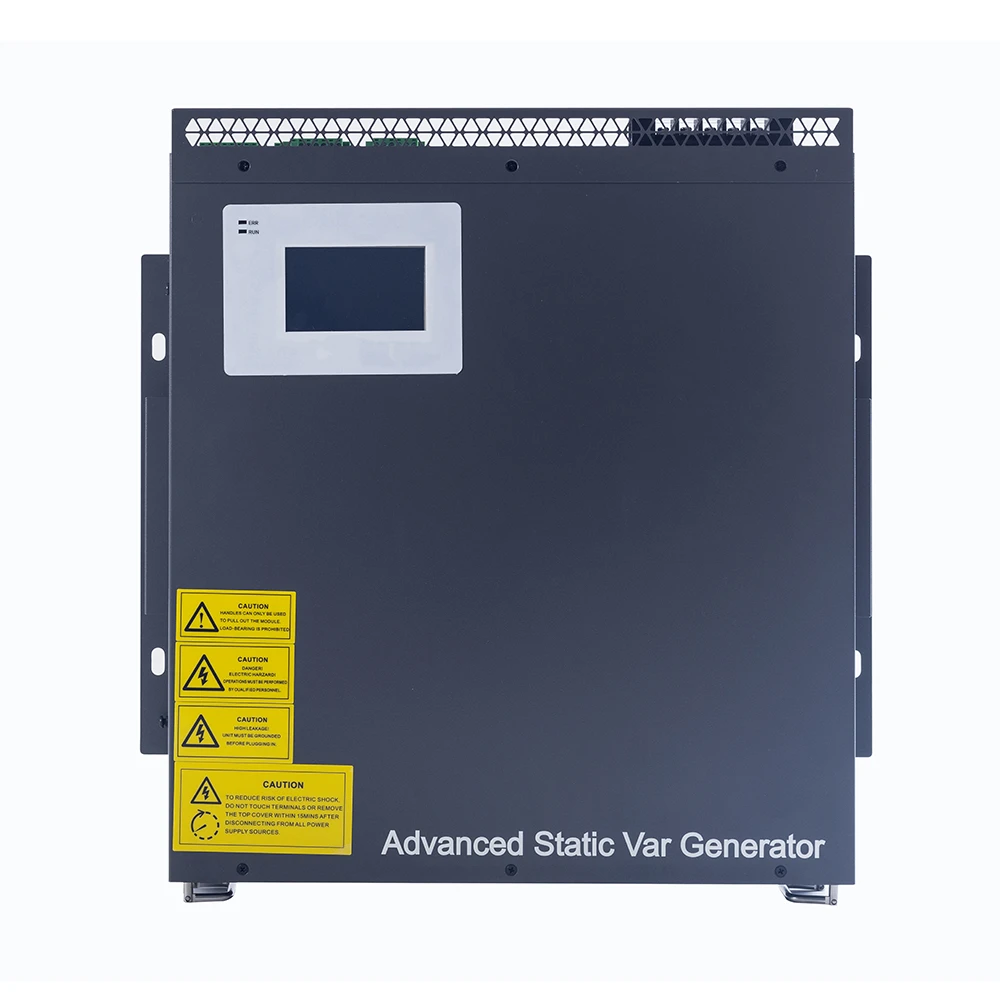
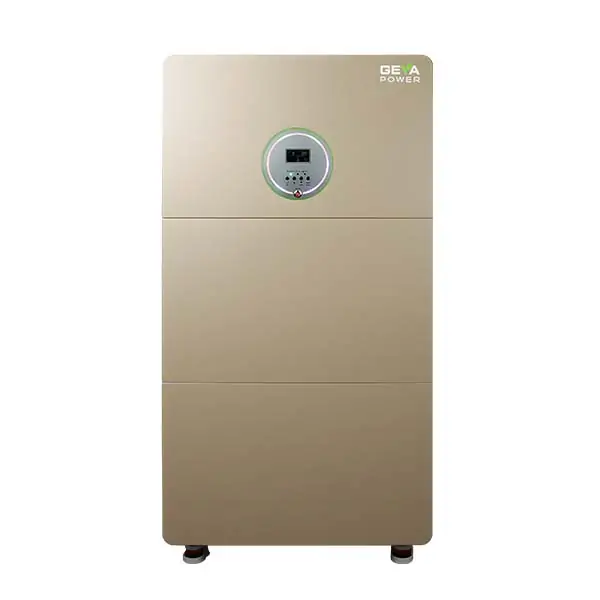
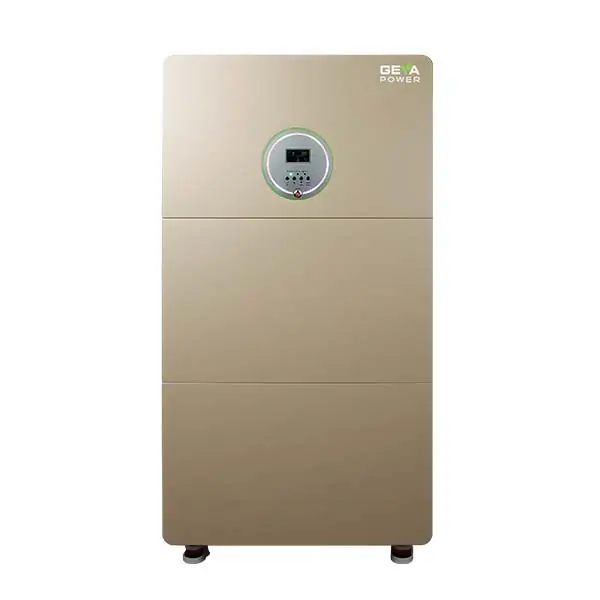
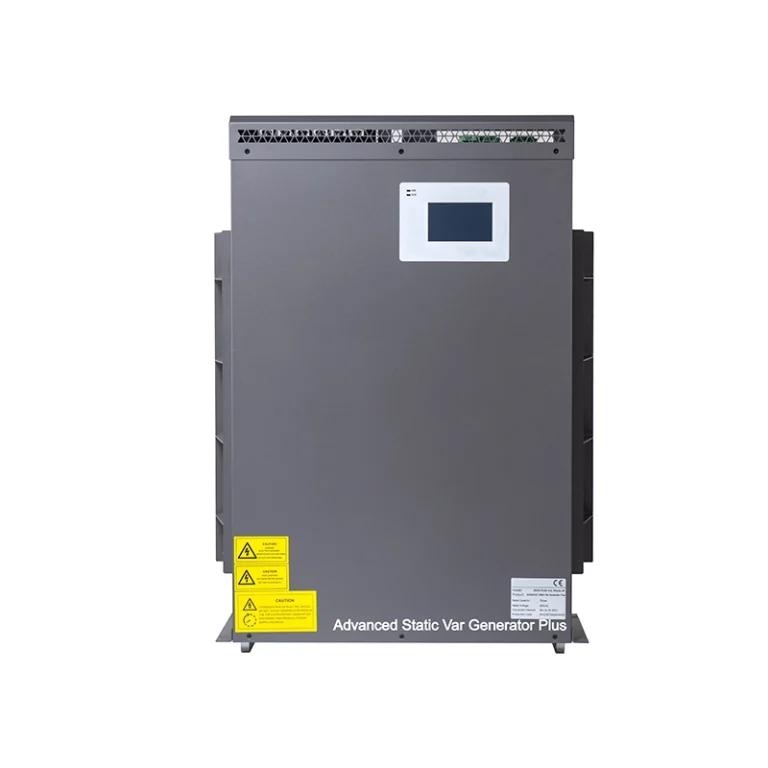
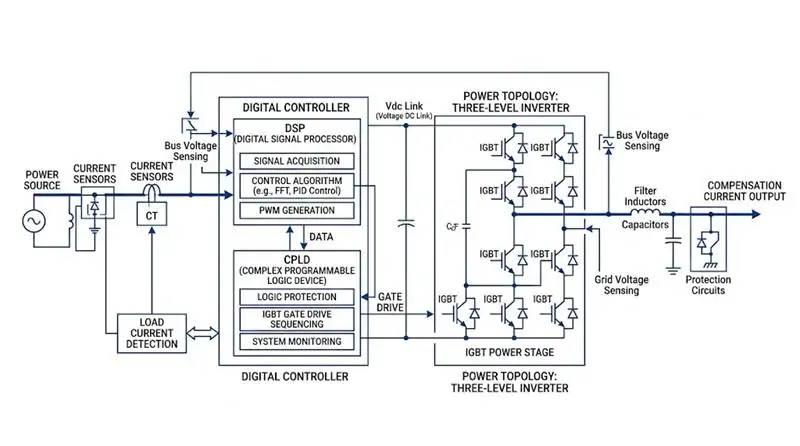
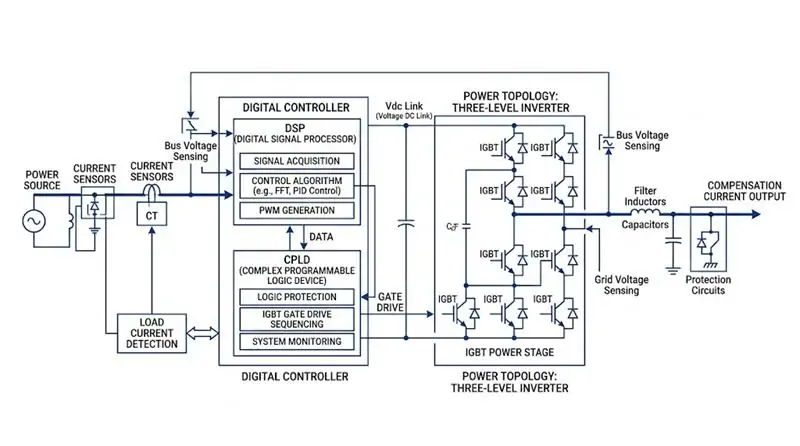
GEYA’s GY-ASVG series uses a voltage source converter, DSP+CPLD full-digital control, three-level topology, real-time load-current detection, and modular architecture to provide flexible power quality compensation for industrial and commercial electrical systems.
For applications where multiple power quality problems occur at the same time, this integrated approach can simplify system design while providing faster and more precise compensation.
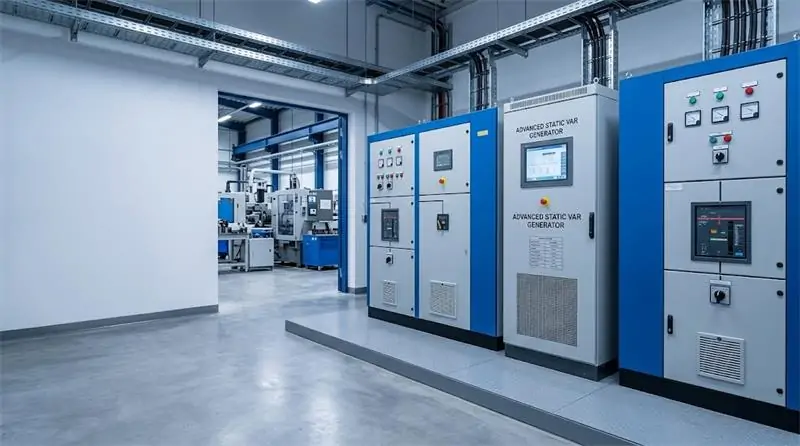
What Is an Advanced Static Var Generator?
An Advanced Static Var Generator (ASVG) is a power electronic compensation device that operates in parallel with the electrical grid. It continuously monitors load current and uses advanced control algorithms to determine the required compensation current.
The GEYA GY-ASVG detects reactive power, harmonic current, and three-phase power imbalance conditions. Based on the detected electrical conditions, the control system generates corresponding IGBT drive signals so the converter can inject compensation current into the system.
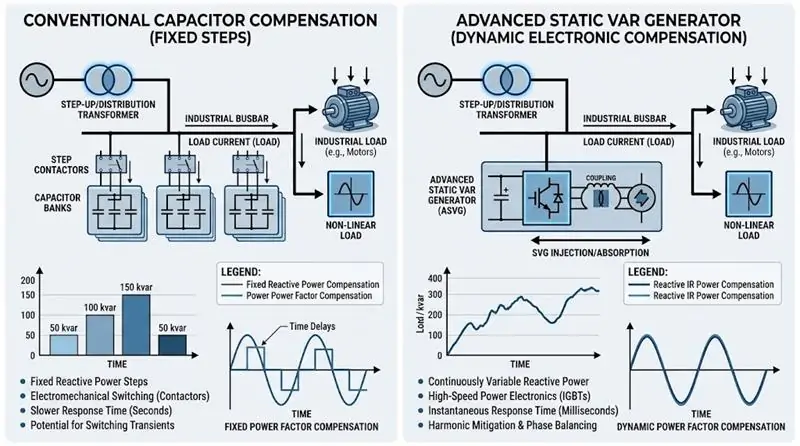
In practical terms, the ASVG does not simply switch fixed capacitor steps in and out. Instead, it dynamically generates compensation current according to changing load conditions.
This makes ASVG technology particularly useful for facilities where electrical loads change frequently or where several power quality problems exist simultaneously.
For a broader introduction to reactive power compensation, see our guide to Static Var Generator (SVG) and Reactive Power Compensation.
Why Industrial Facilities Are Moving Toward Advanced Power Quality Solutions
Traditional electrical compensation systems can work well when the load is relatively stable and the main requirement is basic reactive power correction. However, modern industrial facilities often have much more complex electrical profiles.
A single facility may contain motors, variable frequency drives, welding machines, UPS systems, power converters, compressors, solar inverters, and other nonlinear loads. These loads can create different power quality problems at the same time.
For example, a manufacturing plant may experience:
- Rapidly changing reactive power demand
- Low power factor during heavy-load operation
- Harmonic current generated by power electronic equipment
- Three-phase current imbalance
- Neutral-line current problems in three-phase four-wire systems
- Additional stress on transformers, cables, and distribution equipment
Instead of installing separate compensation technologies for every individual problem, an ASVG can combine several compensation functions into one modular platform.
Three Core Value Propositions of GEYA ASVG
1. Stable and Precise Power Quality Compensation
Industrial loads rarely remain constant throughout the day. Production lines start and stop, motors accelerate, welding equipment operates intermittently, and power electronic loads can change within milliseconds.
GEYA ASVG is designed for dynamic compensation rather than fixed-step compensation. Its reactive power compensation response is less than 10 ms, while harmonic compensation response is less than 40 ms according to the product specifications.
The GY-ASVG provides a reactive power compensation capability of ≥99%, while its current harmonic compensation capability is ≥95% for the supported harmonic range.
2. Flexible Compensation for Different Electrical Problems
Not every facility has the same power quality problem. Some plants mainly need reactive power compensation. Others need harmonic mitigation. Some require both functions together, along with three-phase unbalance compensation.
GEYA ASVG supports selectable combinations of reactive power compensation, harmonic compensation, and three-phase unbalance compensation. This allows engineers to configure the system around the actual electrical characteristics of the site.
3. Long-Term Value Through Modular Design
Power systems change over time. Production capacity may increase, new production lines may be added, or additional power electronic loads may be installed.
GEYA ASVG uses a modular architecture that supports multiple modules connected in parallel. This makes it possible to expand compensation capacity without completely redesigning the power quality system.
For industrial users, this modular approach can simplify installation and maintenance while providing a more flexible path for future system expansion.
Core ASVG Functions and Applications
1. Dynamic Reactive Power Compensation
Reactive power is commonly associated with inductive loads such as motors, transformers, compressors, pumps, and other industrial equipment.
When reactive power demand changes rapidly, a fixed capacitor bank may not respond with sufficient flexibility. Over-compensation and under-compensation can also become concerns when load conditions change frequently.
An ASVG continuously monitors electrical conditions and generates the required compensation current dynamically.
GEYA GY-ASVG provides reactive power compensation of ≥99% with a reactive power response time of less than 10 ms.
This makes the technology suitable for applications such as:
- Heavy manufacturing plants
- Motor-driven production lines
- Compressors and pumping systems
- Welding and metal-processing equipment
- Industrial automation systems
- Commercial electrical distribution systems
2. Harmonic Compensation
Modern power electronic equipment can generate harmonic currents. Variable frequency drives, rectifiers, UPS systems, and other nonlinear loads can distort the current waveform and increase electrical stress within the distribution system.
GEYA ASVG can provide current harmonic compensation with a compensation capability of ≥95% and supports compensation from the 2nd to the 50th harmonic order, with the compensation rate adjustable for individual harmonic orders.
This allows engineers to target the actual harmonic spectrum measured at the site rather than treating every harmonic order in exactly the same way.
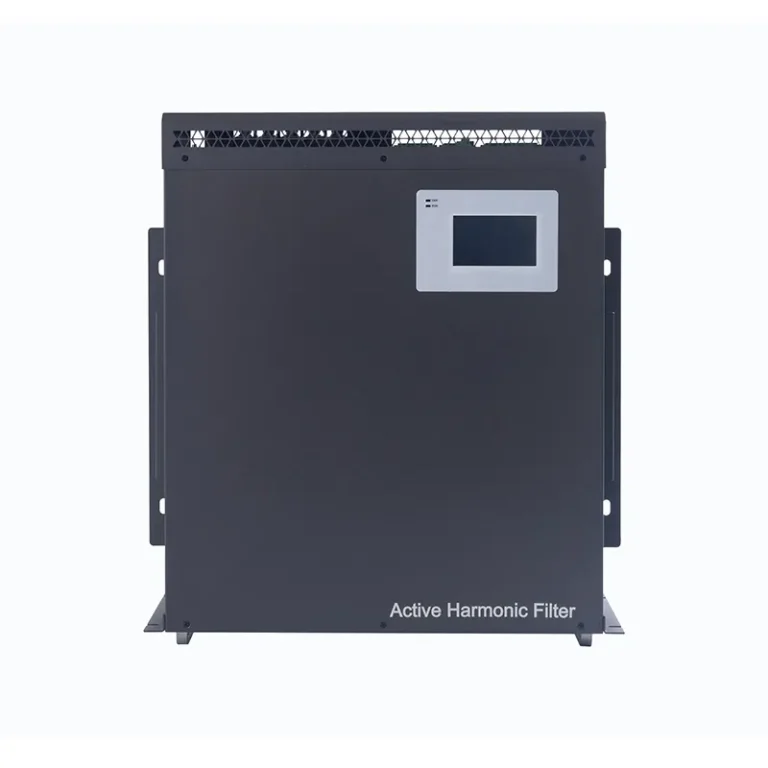
For facilities where harmonic distortion is the primary concern, a dedicated GEYA Active Harmonic Filter can also be considered.
3. Three-Phase Unbalance Compensation
Uneven loading between phases can create three-phase current imbalance. In industrial distribution systems, this can increase equipment stress and reduce the overall quality of the electrical supply.
GEYA ASVG supports three-phase unbalance compensation, with the specified unbalance degree after compensation at ≤5%.
This function can be particularly useful in facilities where single-phase and three-phase loads operate together or where load distribution changes significantly during production.
4. Neutral-Line Current Management
For three-phase four-wire systems, neutral-line current can become an important consideration when zero-sequence components are present.
The standard GY-ASVG provides neutral-line zero-sequence current filtering capability at two times the phase-line filtering capability, with three times available as a customization option.
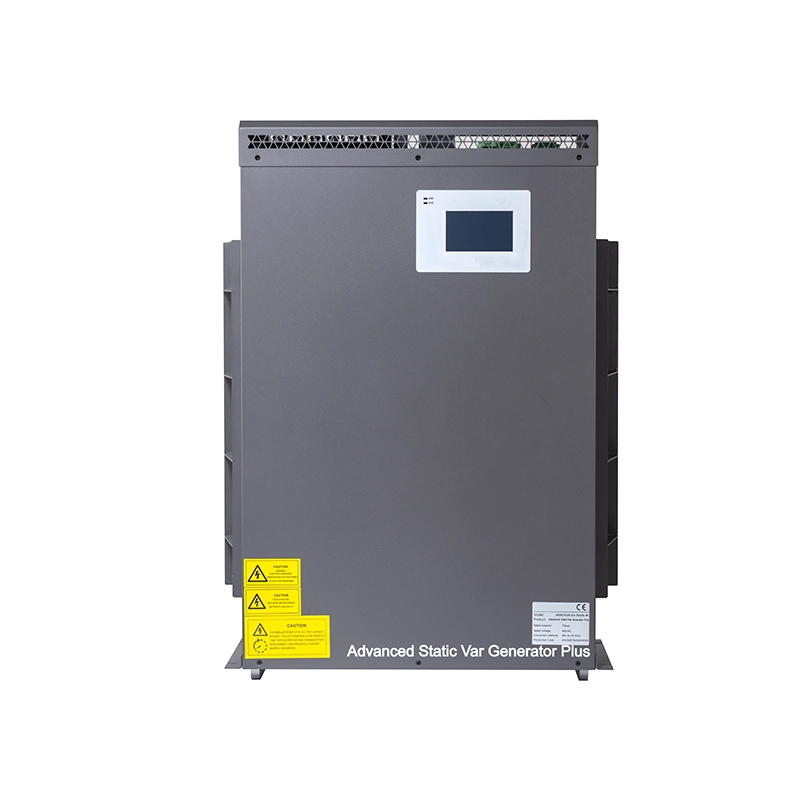
For projects requiring enhanced neutral-line filtering and improved EMC performance, the GY-ASVG-PLUS provides neutral-line filtering capability up to three times the phase-line filtering capability and Class A EMC performance.
ASVG vs. Conventional Reactive Power Compensation
The biggest difference between ASVG technology and conventional capacitor-based compensation is the way compensation is generated and controlled.
| Feature | Conventional Capacitor Compensation | Advanced Static Var Generator |
|---|---|---|
| Compensation method | Fixed or stepped compensation | Dynamic electronic compensation |
| Reactive power response | Dependent on switching steps | <10 ms |
| Harmonic compensation | Limited | ≥95%, 2nd–50th harmonics |
| Three-phase unbalance compensation | Limited | Available |
| Changing loads | Less flexible | Highly suitable |
| Modular expansion | System dependent | Multiple modules can operate in parallel |
This does not mean that capacitor banks are unsuitable for every application. For stable loads with relatively simple compensation requirements, conventional solutions can still be appropriate.
The advantage of ASVG becomes more apparent when the electrical system has rapidly changing loads or multiple power quality problems that need to be addressed simultaneously.
How to Select the Right ASVG for Your Application
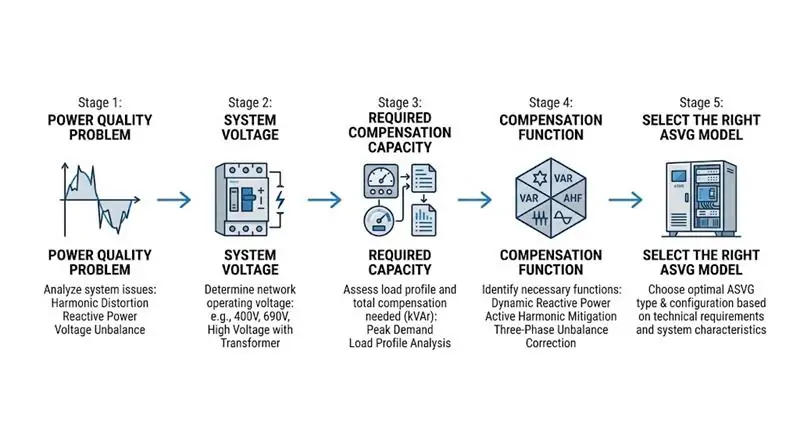
ASVG selection should begin with the electrical problem, not simply the rated capacity of the equipment.
Step 1: Identify the Main Power Quality Problem
Before selecting a model, determine whether the main issue is:
- Reactive power and low power factor
- Harmonic current distortion
- Three-phase current imbalance
- A combination of two or more problems
Site measurements should be used whenever possible. Engineers should review load current, reactive power, harmonic spectrum, phase imbalance, system voltage, and operating conditions before final equipment sizing.
Step 2: Confirm System Voltage
According to the GEYA product catalog, the GY-ASVG series supports multiple voltage levels, including AC220V, AC380V, AC500V, AC690V, and AC800V configurations depending on the model.
The operating voltage ranges specified in the catalog include:
- AC220V: -20% to +20%
- AC380V: -20% to +20%
- AC500V: -20% to +20%
- AC690V: -20% to +15%
- AC800V: -20% to 850V maximum
Step 3: Determine Required Compensation Capacity
The required ASVG capacity should be based on measured reactive power demand, harmonic current requirements, and the compensation strategy selected for the project.
For the GY-ASVG series, the catalog lists different compensation capacities across voltage levels. The available configurations include multiple capacities from small modular units through larger industrial compensation systems.
For example, the catalog lists 220V configurations from 3 kvar to 75 kvar and 380V configurations from 5 kvar to 150 kvar, with additional configurations available for 500V, 690V, and 800V systems.
For larger installations, multiple ASVG modules can be connected in parallel, allowing engineers to build a compensation system around the actual load profile.
Step 4: Select the Required Function Combination
GEYA ASVG can be configured for different combinations of:
- Reactive power compensation
- Harmonic compensation
- Three-phase unbalance compensation
For example, a manufacturing plant with motors and variable frequency drives may require both reactive power and harmonic compensation. A three-phase four-wire commercial system may also require unbalance and neutral-line current management.
Step 5: Select the Appropriate ASVG Variant
GEYA offers several ASVG configurations for different application requirements.
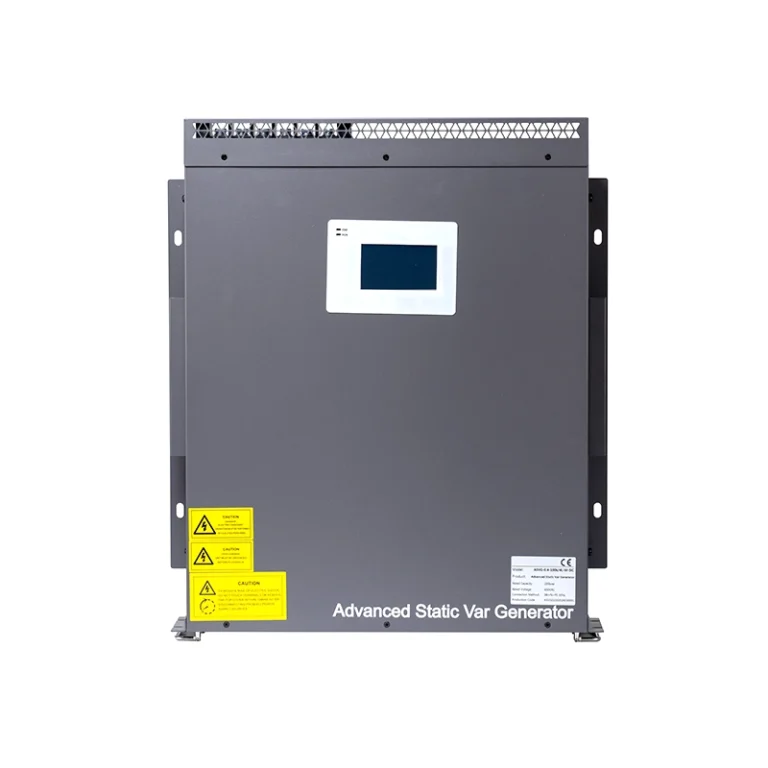
- GY-ASVG: General-purpose advanced power quality compensation with reactive, harmonic, and unbalance compensation functions.
- GY-ASVG-PLUS: Enhanced version with three-times phase-line neutral filtering capability and Class A EMC performance.
- GY-ASVG-SiC: SiC-based configuration designed for higher efficiency and high-density applications.
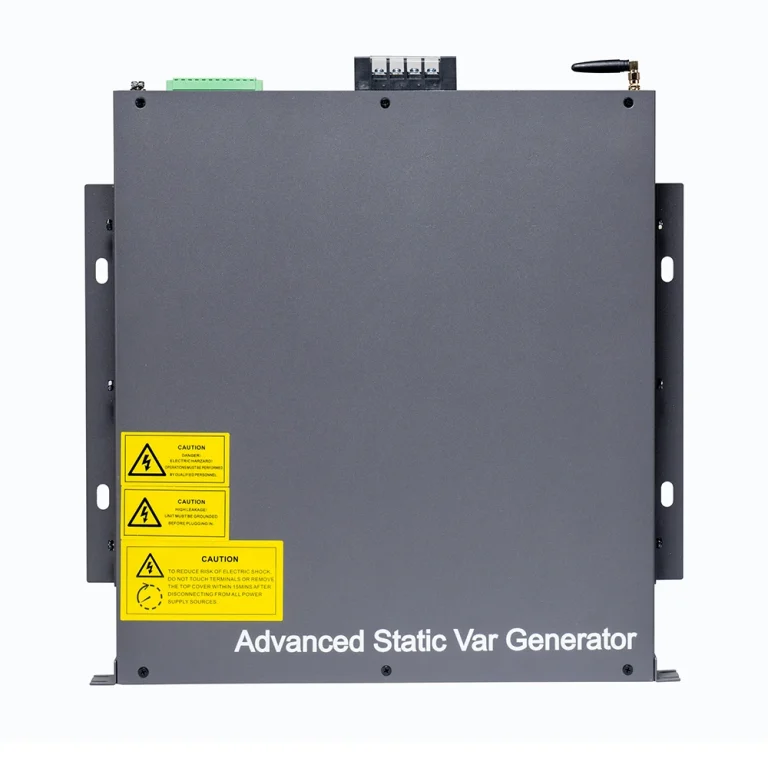
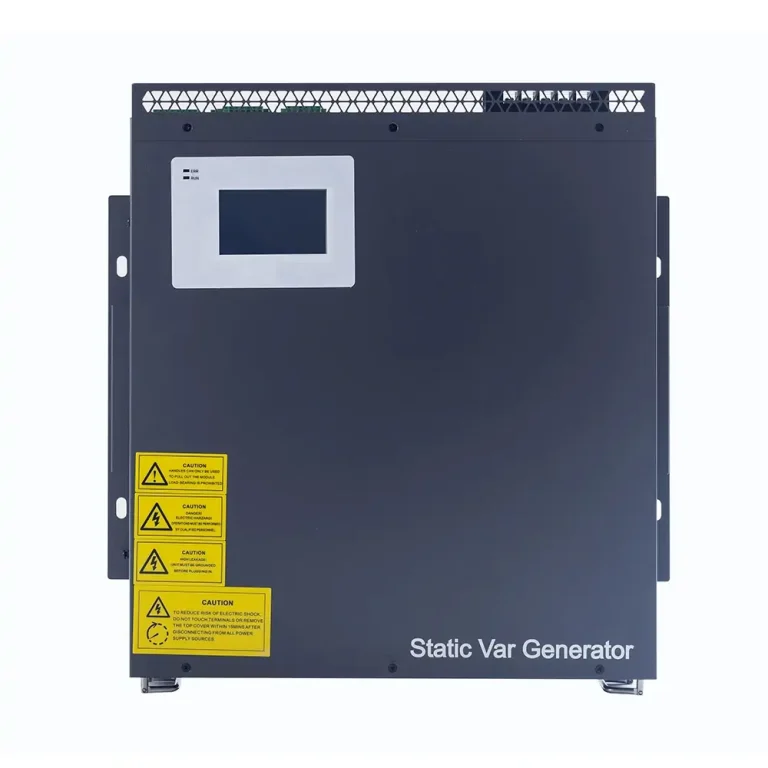
- GY-ASVG-IU: Compact rack-mount configuration for space-constrained installations.
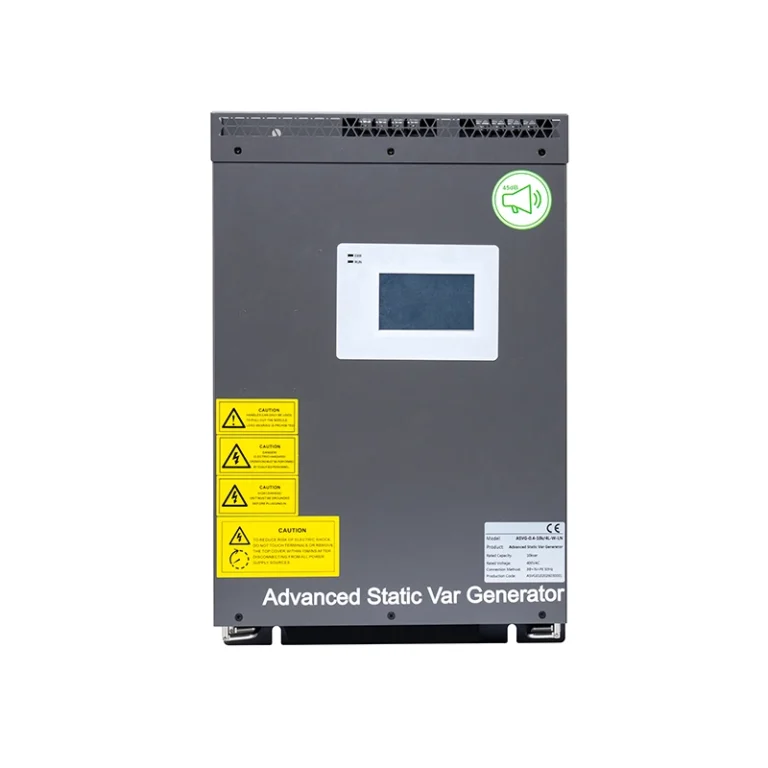
- GY-ASVG-LN: Low-noise configuration for applications where acoustic performance is important.
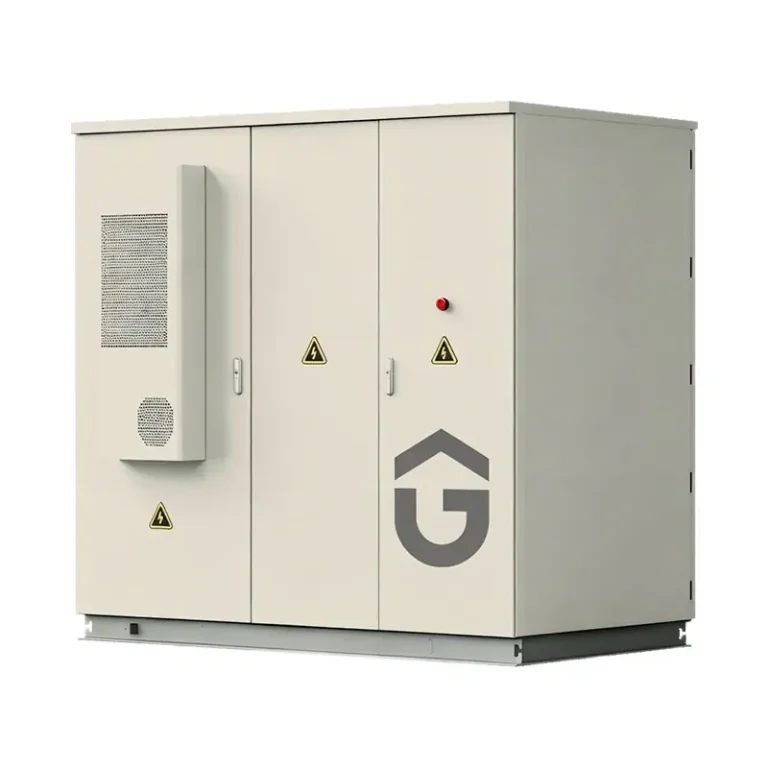
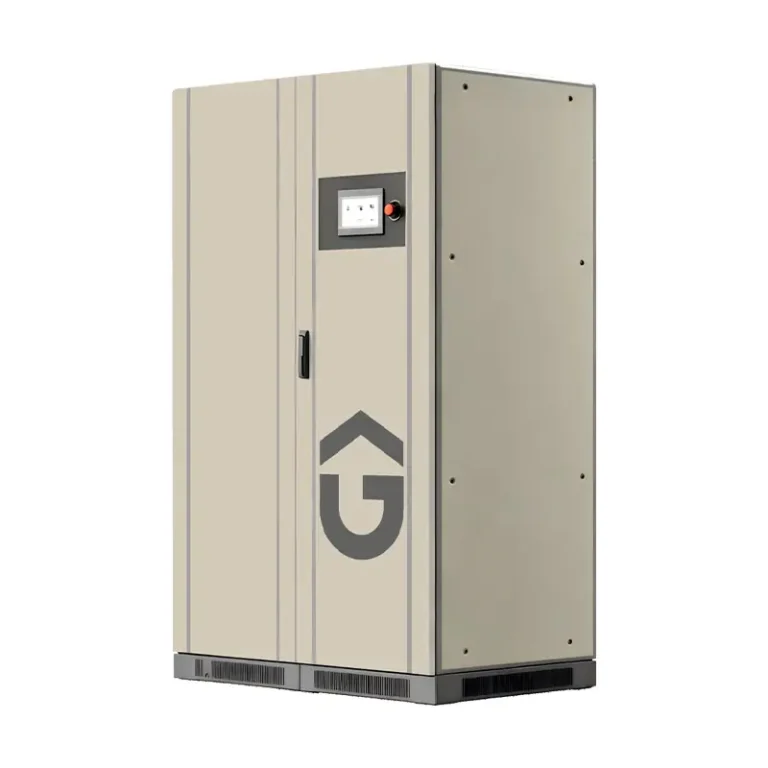
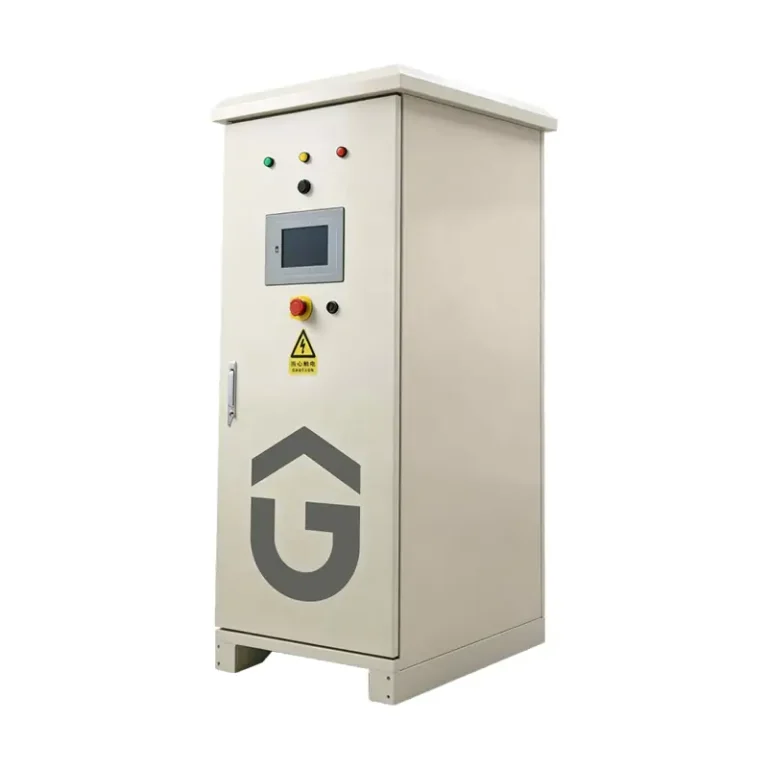
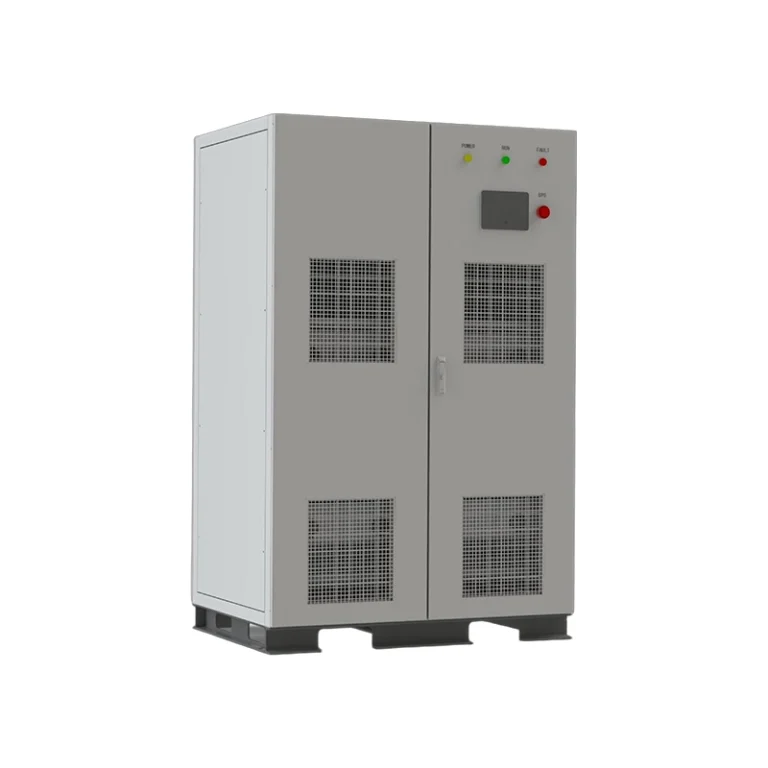
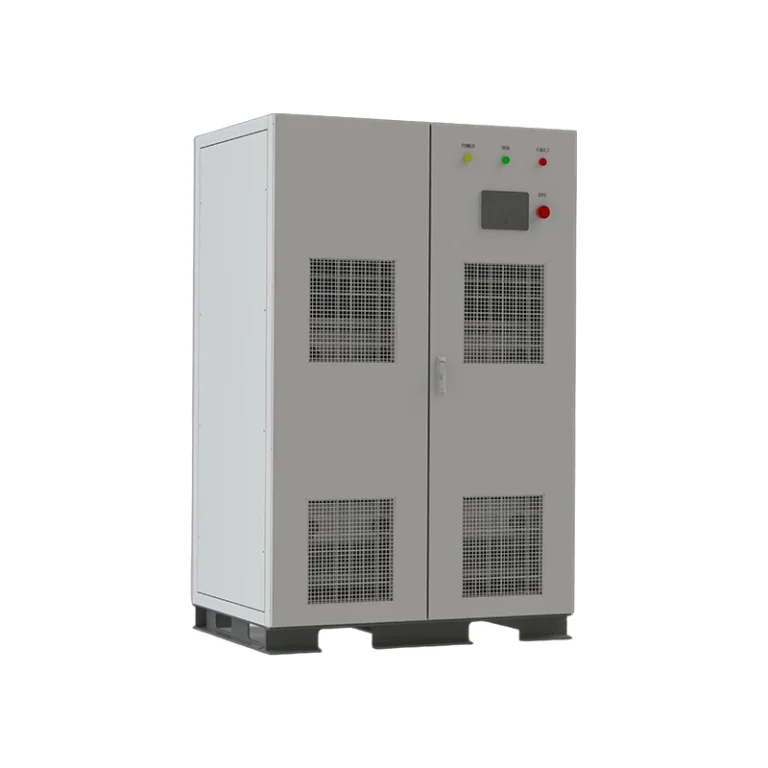
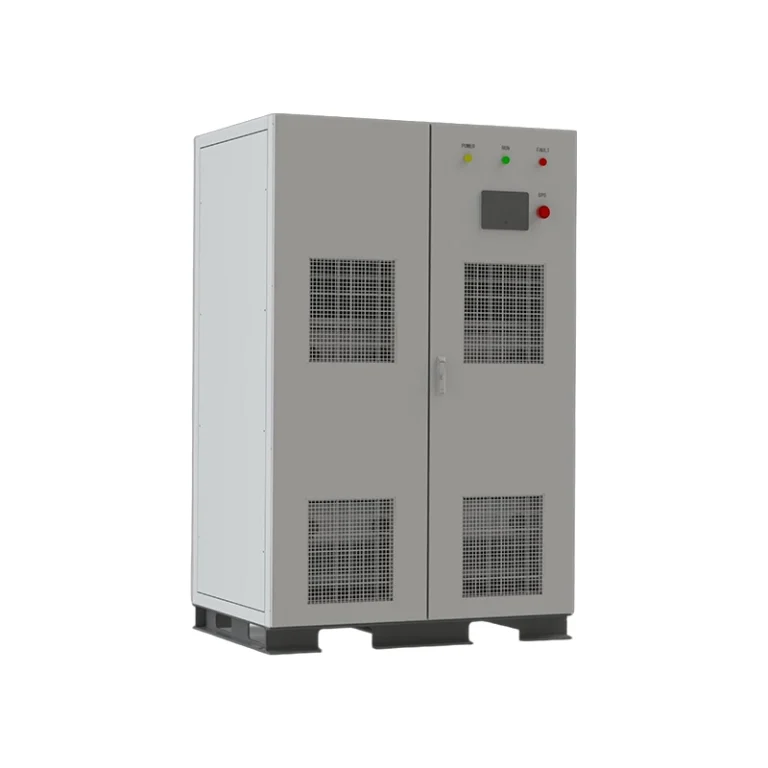
- GY-ASVG-Cabinet: Integrated cabinet solution for larger industrial power quality projects.
You can review the complete GEYA Power Quality Management product range to compare the available configurations.
ASVG Selection for Different Industrial Applications
Heavy Manufacturing Plants
Heavy manufacturing facilities often contain motors, compressors, pumps, welding systems, and other high-power equipment. The electrical load can change substantially during production cycles.
For these facilities, the first step is to measure the reactive power profile and determine whether harmonic current or phase imbalance is also present.
Where multiple problems occur simultaneously, an ASVG configured for combined compensation can provide a more comprehensive solution than a reactive-power-only device.
Solar and Renewable Energy Projects
Renewable energy systems introduce power electronic interfaces and changing operating conditions into electrical networks. Solar and wind projects may also need to manage reactive power behavior and power quality at the point of connection.
For renewable energy projects, engineers should evaluate the actual grid configuration, voltage level, reactive power requirements, harmonic spectrum, and interconnection requirements before sizing the ASVG.
ASVG can be considered as part of a broader power quality architecture where dynamic reactive power and harmonic compensation are required.
Commercial Buildings and Large Facilities
Commercial facilities may contain HVAC systems, elevators, variable frequency drives, UPS equipment, lighting systems, and other mixed loads.
For these applications, compact modular ASVG configurations can be useful where installation space is limited or where load conditions change throughout the day.
For smaller or space-constrained installations, GEYA also offers the GY-ASVG-IU rack-mount ASVG.
Facilities with High Concentrations of Variable Frequency Drives
Variable frequency drives can contribute to harmonic current and reactive power behavior depending on the system architecture and drive technology.
Where both reactive power and harmonic problems exist, an ASVG can address multiple compensation requirements within the same system.
However, the harmonic spectrum should always be measured before final sizing. If harmonic filtering is the dominant requirement, engineers should also evaluate whether a dedicated AHF solution is more appropriate.
Inside the GEYA ASVG: Technology and Architecture
DSP+CPLD Full-Digital Control
The GEYA ASVG uses a DSP+CPLD full-digital control core. This control architecture allows the system to process electrical measurements and generate control signals for the power converter.
Compared with simple switching-based compensation, digital control provides a more flexible platform for dynamic power quality management.
Three-Level Topology
The GY-ASVG adopts three-level topology technology. The topology is part of the power conversion architecture and works together with the digital control system to manage the compensation current.
For engineers evaluating an ASVG, topology should be considered together with switching frequency, efficiency, thermal design, control algorithms, and protection functions rather than treated as a standalone specification.
Two External Current Sampling Channels
GEYA ASVG provides two external current sampling channels. According to the product catalog, these channels can support different compensation configurations, including low-voltage-side sampling with low-voltage-side compensation, high-voltage-side sampling with low-voltage-side compensation, and reactive component compensation.
This flexibility can be valuable when integrating the ASVG into an existing industrial distribution system.
Modular Architecture
Modular architecture allows multiple units to operate in parallel. This provides flexibility during system design and can simplify maintenance because individual modules can be serviced without necessarily replacing the complete compensation system.
The GEYA design also uses an independent air duct and independent board compartment structure to support stable operation.
Protection and Communication
GEYA ASVG includes protection functions covering conditions such as overload, software and hardware overcurrent, grid overvoltage and undervoltage, grid voltage imbalance, power supply failure, overtemperature, frequency abnormalities, and short-circuit conditions.
The equipment provides two RS485 communication interfaces and supports Wi-Fi.
The specified overload capability is 1.2 times rated capacity for 60 seconds.
Standard ASVG vs. ASVG-PLUS vs. ASVG-SiC
GEYA’s ASVG family includes different configurations for different project requirements.
| Model | Main Advantage | Key Specification | Typical Consideration |
|---|---|---|---|
| GY-ASVG | Integrated power quality compensation | Reactive ≥99%; harmonic ≥95%; unbalance ≤5% | General industrial applications |
| GY-ASVG-PLUS | Enhanced neutral filtering and EMC | Neutral filtering 3× phase-line capability | More demanding electrical environments |
| GY-ASVG-SiC | High-efficiency SiC power technology | Peak efficiency >98.5%; up to 800 kvar per cabinet | High-density and efficiency-focused applications |
The GY-ASVG-SiC uses SiC power devices and can achieve peak efficiency above 98.5%. Its catalog specification also states that a single cabinet can accommodate up to eight modules, with a maximum capacity of 800 kvar.
For projects where EMC and neutral-line filtering are especially important, the GY-ASVG-PLUS provides enhanced specifications, including three-times phase-line neutral filtering capability and Class A EMC performance.
See the GY-ASVG-SiC and GY-ASVG-PLUS product pages for more details.
Operating Environment and Installation Considerations
Correct installation is essential for long-term ASVG reliability.
According to the GEYA catalog, the standard operating conditions include:
- Altitude: below 2,000 m; above 2,000 m, derating according to GB/T 3859.2
- Ambient temperature: -10°C to +50°C
- Above 40°C: capacity derating not exceeding 30%
- Relative humidity: ≤90%
- No condensation under the specified humidity conditions
- Pollution degree: Class III or below
- Protection rating: IP20, with IP54 available as a customization option
- Installation: rack-mounted or wall-mounted depending on configuration
The ASVG should be installed in an electrical environment with adequate ventilation and sufficient clearance around air intake and exhaust paths.
Because the equipment uses forced-air cooling, airflow management is an important part of installation and maintenance.
ASVG Maintenance Guide for Long-Term Stable Operation
1. Check Cooling and Ventilation
Dust accumulation can restrict airflow and reduce cooling performance. Maintenance personnel should periodically inspect ventilation paths, cooling fans, air filters where applicable, and the surrounding electrical cabinet environment.
Do not place materials or other equipment where they can block the ASVG air intake or exhaust path.
2. Inspect Electrical Connections
During scheduled maintenance, inspect cable terminals, busbar connections, grounding connections, communication wiring, and other accessible electrical connections according to the site’s maintenance procedures.
Loose connections can create additional heating and should be addressed promptly by qualified electrical personnel.
3. Monitor Operating Temperature
Operating temperature should remain within the specified range. The catalog specifies an ambient operating range of -10°C to +50°C, with capacity derating above 40°C.
If an installation regularly operates in a high-temperature environment, engineers should consider the available compensation capacity under the actual thermal conditions rather than sizing only from the nominal rating.
4. Review Alarm and Protection Records
ASVG protection functions cover overcurrent, overvoltage, undervoltage, overtemperature, frequency abnormalities, power supply faults, and other conditions.
Repeated alarms should not simply be reset. Maintenance teams should identify the underlying electrical or environmental cause before returning the equipment to continuous operation.
5. Periodically Review Power Quality Measurements
Power quality conditions can change after production equipment is added or operating schedules change.
Periodic measurements of reactive power, harmonic current, phase balance, voltage, and load current can help determine whether the existing compensation system remains correctly sized.
6. Keep the Installation Environment Clean
Industrial environments can expose electrical equipment to dust, oil mist, humidity, and other contaminants. Keeping the electrical room and cabinet environment clean can reduce thermal and insulation-related risks.
Common ASVG Selection Mistakes to Avoid
Mistake 1: Selecting Capacity Only by Transformer Size
Transformer capacity does not directly tell you how much ASVG compensation is required.
Actual load measurements and reactive power demand should be used to determine the compensation requirement.
Mistake 2: Ignoring Harmonic Current
A facility may have acceptable power factor but still experience significant harmonic current.
Therefore, power factor alone should not be used as the only indicator when selecting a comprehensive power quality solution.
Mistake 3: Ignoring Three-Phase Imbalance
If the electrical system has significant phase loading differences, reactive compensation alone may not address the complete problem.
Three-phase current imbalance should be measured when evaluating an ASVG solution.
Mistake 4: Selecting a Model Without Checking Voltage and Grid Configuration
Engineers should confirm system voltage, three-phase three-wire or three-phase four-wire configuration, required compensation functions, installation space, and environmental conditions before final selection.
Mistake 5: Treating Every Power Quality Problem as an ASVG Problem
ASVG is a comprehensive compensation technology, but it is not a universal replacement for every power quality device.
For example, if harmonic current is the dominant problem, a dedicated AHF may be the better engineering choice. If voltage regulation is the primary requirement, a dedicated voltage-control solution should be evaluated.
The correct approach is to identify the actual electrical problem first and then select the appropriate technology.
When Should You Choose an ASVG?
An ASVG is particularly attractive when an electrical system has more than one power quality challenge.
Consider ASVG when your facility has:
- Rapidly changing reactive loads
- Low power factor problems
- Significant harmonic current
- Three-phase current imbalance
- Three-phase four-wire neutral current concerns
- Multiple power quality problems occurring simultaneously
- A need for modular expansion
- Limited installation space
For a single-function requirement, a dedicated SVG or AHF may be sufficient. For a multi-dimensional power quality problem, an ASVG can provide a more integrated approach.
Why Choose GEYA ASVG?
GEYA ASVG is designed around a practical industrial requirement: power quality problems are often interconnected rather than isolated.
The GY-ASVG platform combines digital control, three-level topology, modular architecture, multiple current-sampling options, and selectable compensation functions within one system.
- Reactive power compensation ≥99%
- Current harmonic compensation ≥95%
- 2nd–50th harmonic compensation
- Three-phase unbalance after compensation ≤5%
- Reactive power response <10 ms
- Harmonic response <40 ms
- Multiple modules can operate in parallel
- Two RS485 communication interfaces with Wi-Fi support
- Rack-mounted and wall-mounted configurations
- IP20 standard, IP54 customizable
For high-efficiency applications, the GY-ASVG-SiC extends the platform with SiC power semiconductor technology and peak efficiency above 98.5%.
For applications requiring enhanced EMC performance and three-times neutral-line filtering capability, the GY-ASVG-PLUS provides an upgraded configuration.
Conclusion: ASVG as a Next-Generation Power Quality Solution
Industrial power quality is becoming increasingly complex as facilities adopt more automation, variable-speed drives, renewable energy systems, and power electronic equipment.
Traditional compensation technologies remain useful for specific applications, but they may not provide the flexibility required when reactive power, harmonics, and three-phase imbalance occur together.
An Advanced Static Var Generator provides a more integrated approach by dynamically compensating reactive power, harmonic current, and three-phase imbalance within one power electronic system.
GEYA GY-ASVG combines ≥99% reactive power compensation capability, ≥95% harmonic compensation capability, 2nd–50th harmonic compensation, ≤5% residual unbalance, modular architecture, and fast dynamic response.
For industrial facilities, renewable energy projects, commercial electrical systems, and other applications where multiple power quality challenges need to be managed, ASVG can provide a flexible foundation for long-term power quality improvement.
The right solution should always begin with measured electrical conditions. If you are planning an ASVG project, provide your system voltage, transformer capacity, load profile, power factor, harmonic measurements, and required compensation functions. GEYA can then help evaluate the appropriate ASVG configuration for your application.