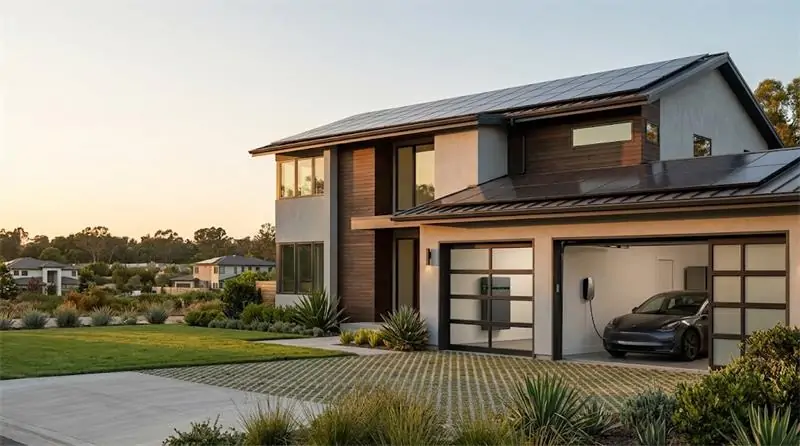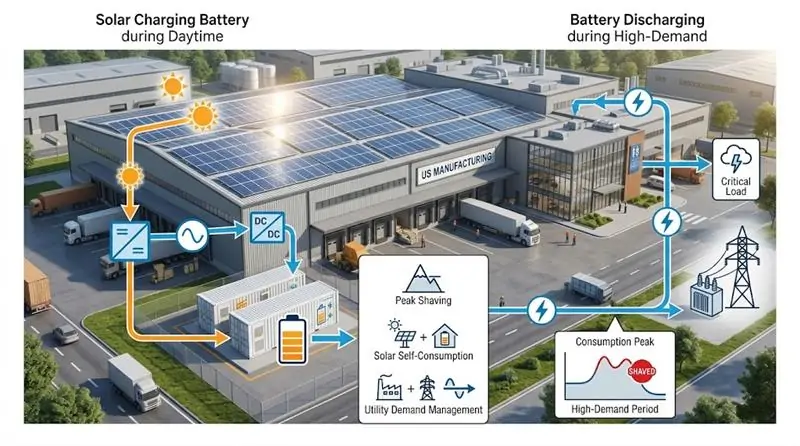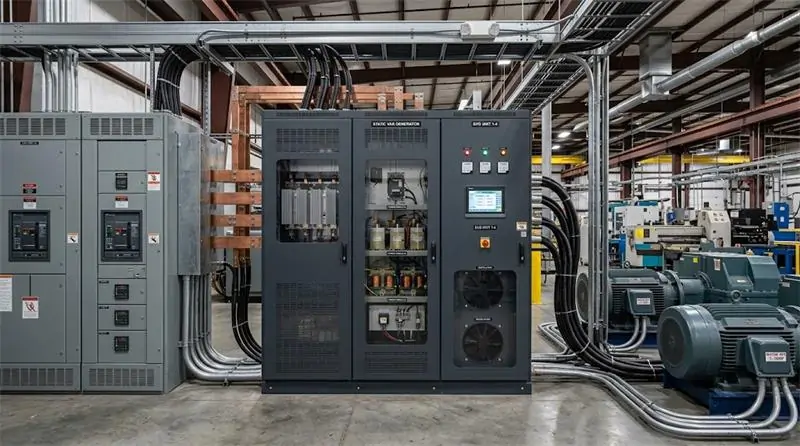
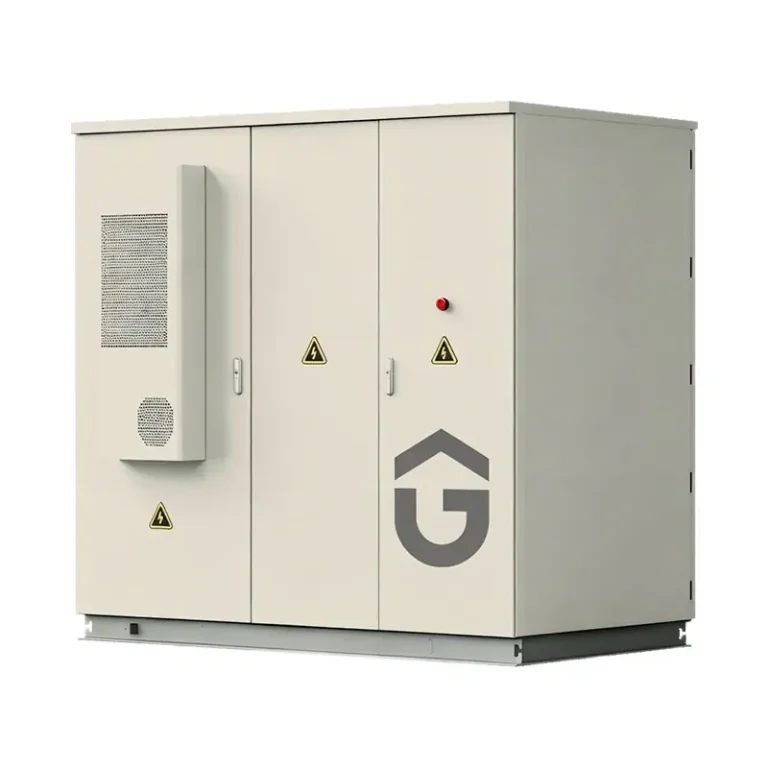
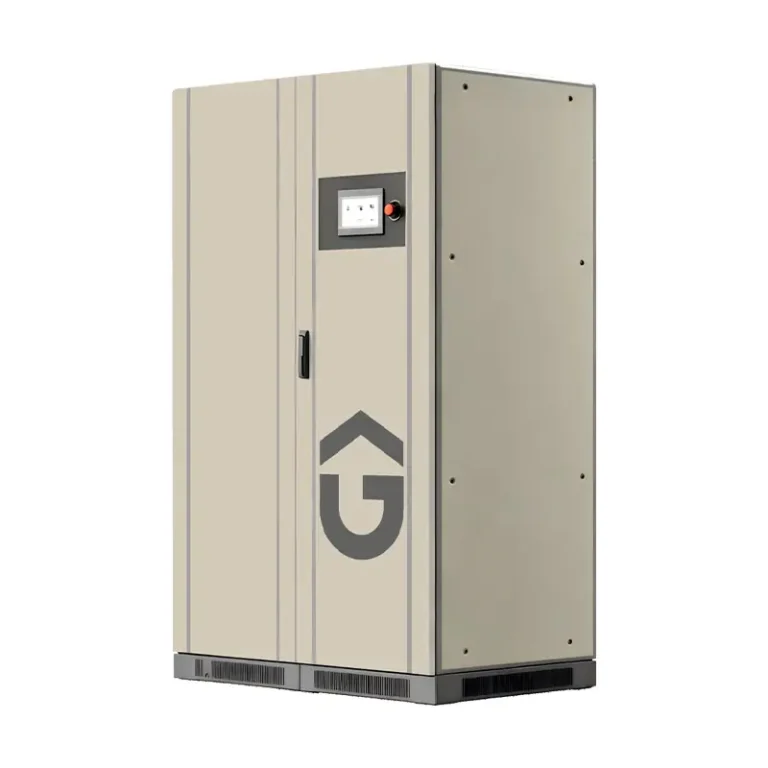
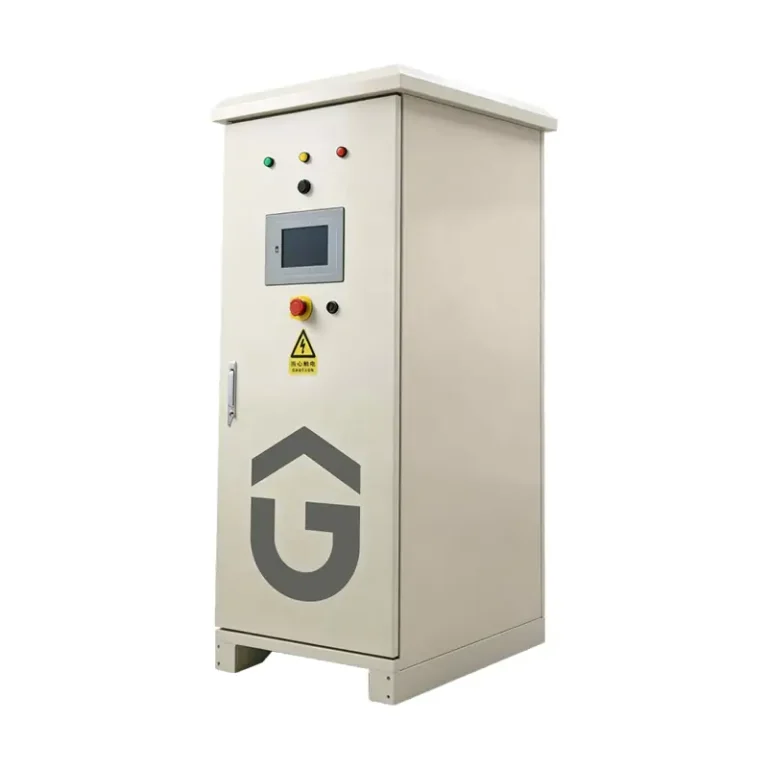
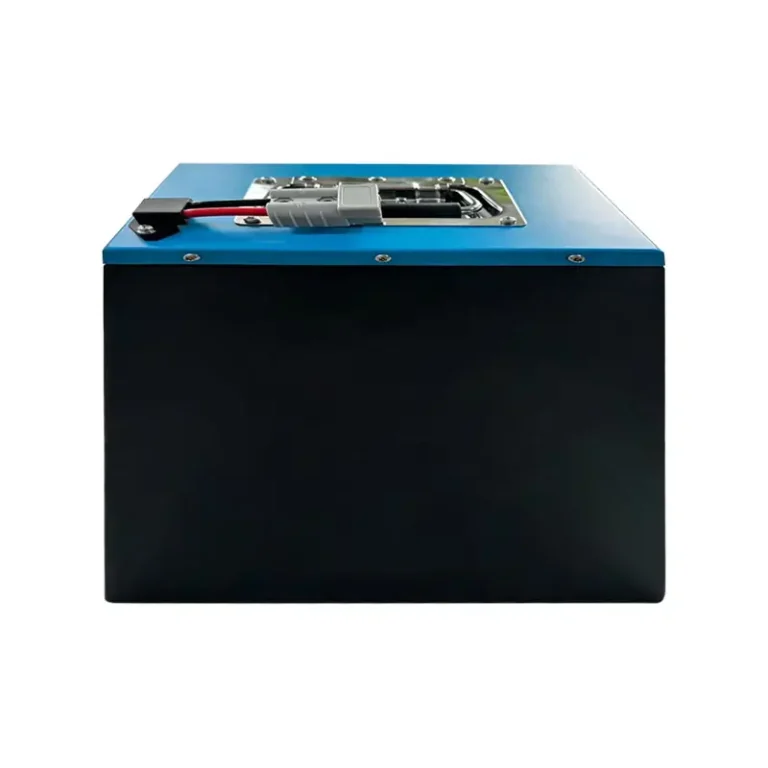
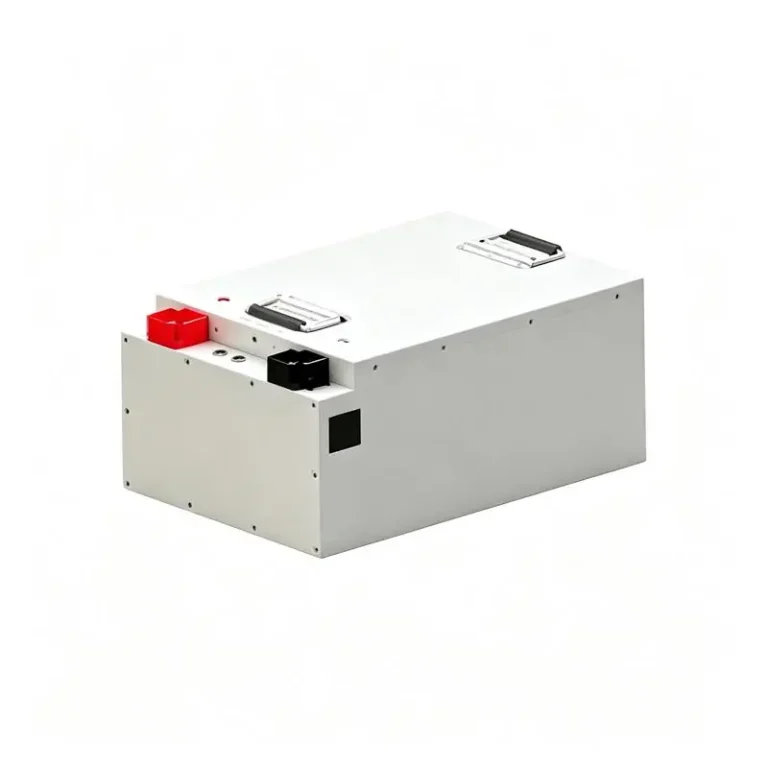
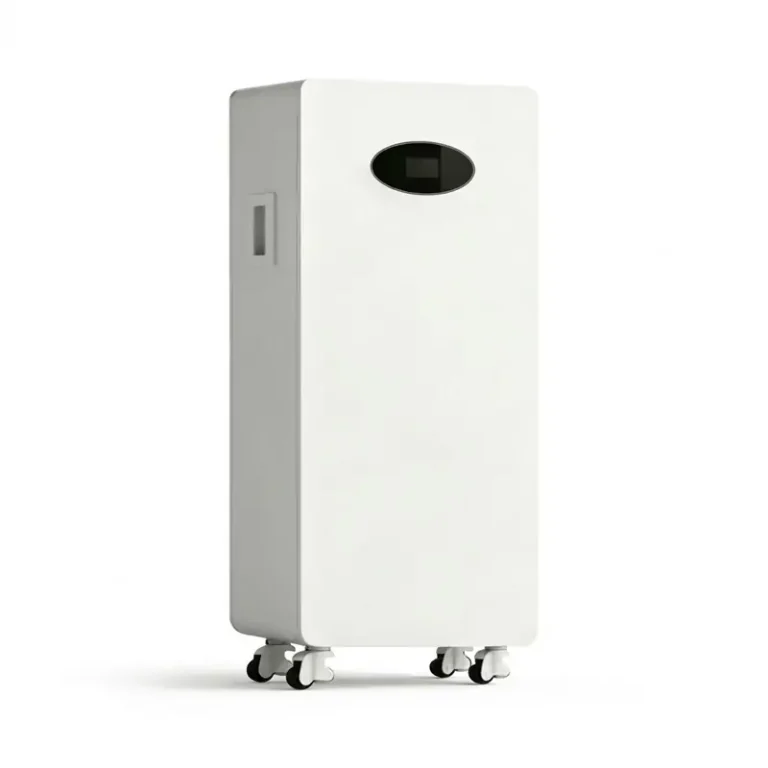
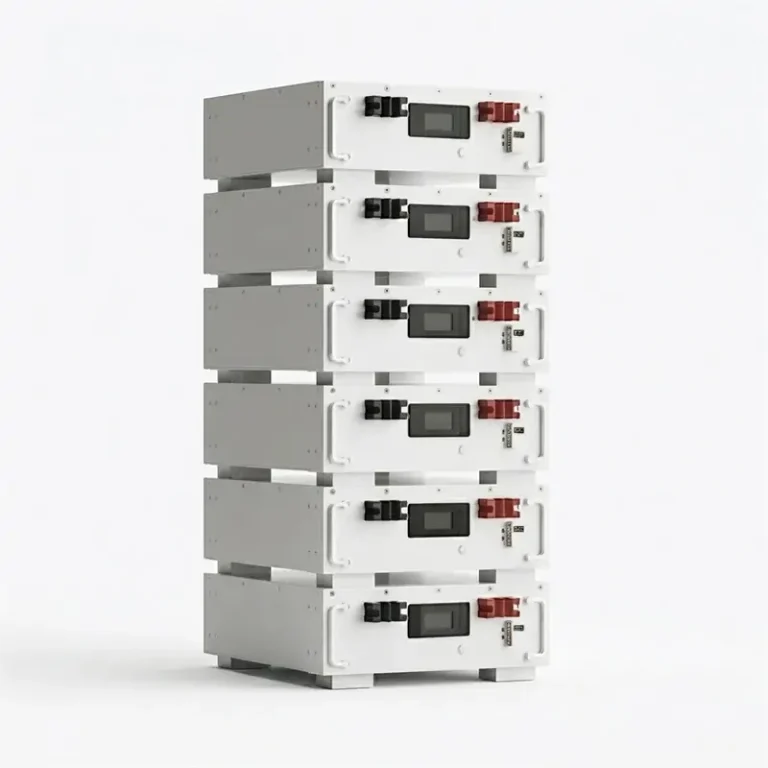
For many homeowners, energy storage is no longer simply about adding a battery to a solar system. A modern Residential Energy Storage System has to solve several problems at once: rising electricity costs, grid interruptions, changing household energy demand, and the need for a system that is safe, reliable, expandable, and easy to understand.
That is why the next generation of Home Energy Storage Systems is moving beyond traditional battery cabinets. The focus is shifting toward a complete experience that combines safe LiFePO4 battery technology, intelligent BMS protection, flexible capacity expansion, smart energy management, and intuitive product selection.
For homeowners, this means less complexity when choosing a system. For solar installers and distributors, it means a more flexible product architecture that can serve different residential applications without creating unnecessary installation or configuration complexity.
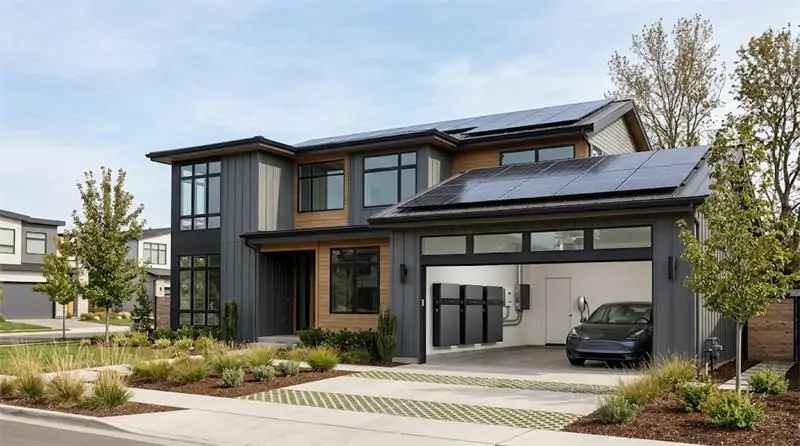
1. Why Residential Energy Storage Is Becoming a Home Essential
1.1 Rising Electricity Costs Are Changing How Homes Use Energy
For a traditional household, electricity is consumed as it is generated by the grid. When electricity prices are higher during certain hours, homeowners generally have limited control over when they purchase power.
A residential battery storage system changes this relationship.
When solar panels generate more electricity than the home needs during the day, the excess energy can be stored in the battery instead of being immediately exported or wasted. That stored energy can then be used later when household demand increases.
This creates a simple energy strategy:
- Generate energy during the day.
- Store excess solar energy.
- Use stored energy when needed.
- Reduce dependence on grid electricity during expensive periods.
This approach becomes particularly valuable in regions where electricity pricing varies by time of day. With a suitable energy management strategy, a home battery can charge when electricity is relatively inexpensive and discharge when electricity costs are higher.
1.2 Grid Reliability Matters More Than Ever
Electricity interruptions can be more than an inconvenience.
A short outage can shut down Wi-Fi routers, refrigerators, security systems, heating and cooling equipment, medical equipment, home offices, and other essential loads.
For households in areas affected by storms, hurricanes, winter weather, wildfire-related outages, or an aging electrical grid, backup power can become an important part of residential energy planning.
A properly configured Residential BESS can automatically provide backup power when the grid becomes unavailable, allowing selected household loads to continue operating.
For homeowners, the goal is not necessarily to power every appliance indefinitely. The more practical approach is to identify critical loads and size the system around real household requirements.
1.3 Traditional Energy Storage Can Still Feel Complicated
Battery capacity. Rated power. Usable capacity. DoD. Charge and discharge current. Inverter efficiency. BMS. Backup loads.
For a professional installer, these are familiar technical parameters. For an ordinary homeowner, they can quickly become confusing.
And this creates another problem: the technically correct product is not always the easiest product to choose.
A modern residential energy storage solution therefore needs to improve not only the hardware, but also the way the product is presented and selected.
2. The Hardware Foundation: Safety Comes First
No matter how attractive or intelligent an energy storage system looks, the fundamental requirement remains the same: the battery must be safe, stable, and designed for long-term operation.
2.1 Grade A LiFePO4 Cells for Long-Term Residential Storage
For residential applications, LiFePO4 (Lithium Iron Phosphate) has become an important battery chemistry because of its combination of safety, cycle life, and stable operating characteristics.
A high-quality residential BESS should start with reliable Grade A LiFePO4 battery cells.
For long-term home energy storage, a design target of 6,000+ cycles represents the kind of durability homeowners and installers should pay attention to when comparing battery systems. Actual cycle life, however, depends on operating temperature, charge and discharge conditions, DoD, C-rate, system configuration, and other test conditions.
This is an important distinction when evaluating battery specifications: cycle life should never be considered as an isolated number.
The better question is how the battery, inverter, BMS, thermal management system, and operating strategy work together throughout the entire service life of the system.
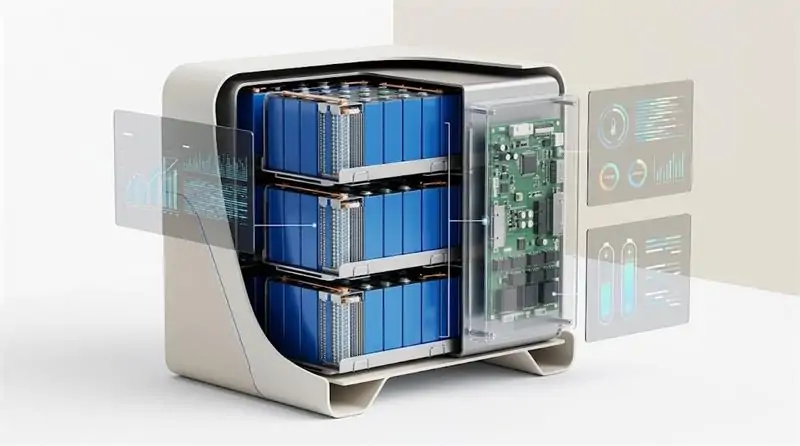
2.2 Intelligent Low-Temperature Heating for Cold-Climate Homes
Temperature is one of the often-overlooked factors in residential battery storage.
In cold regions of the United States and other northern climates, winter temperatures can significantly affect battery charging performance. A battery system therefore needs to consider not only normal operating conditions, but also the environmental conditions in which it will actually be installed.
An intelligent low-temperature self-heating system can help manage cold-weather charging conditions by warming the battery before or during charging when required.
This is particularly relevant for residential systems installed in:
- Cold-climate garages
- Basements
- Detached utility spaces
- Outdoor energy storage locations
- Homes in northern and high-altitude regions
Instead of asking whether a battery can technically operate in cold weather, homeowners and installers should ask a more practical question:
How does the system actively manage battery temperature when conditions become unfavorable?
2.3 BMS: The Intelligent Safety Center of the Battery
The Battery Management System (BMS) is one of the most important components inside a modern residential BESS.
Its role is not simply to display the battery percentage.
A properly designed BMS continuously monitors key operating parameters and helps protect the battery from abnormal conditions such as:
- Over-voltage
- Under-voltage
- Over-current
- Over-temperature
- Abnormal charging and discharging conditions
Modern BMS architecture can also use high-precision algorithms to estimate SoC (State of Charge) and SoH (State of Health).
In simple terms, SoC answers:
“How much energy is available right now?”
SoH answers:
“How healthy is the battery compared with its original condition?”
This information allows the energy storage system to make better decisions while giving homeowners and installers a clearer understanding of system status.
3. The Experience Upgrade: From Battery Cabinet to Home Energy System
Hardware performance is only half of the residential energy storage experience.
The other half is how easily people can understand, install, use, and expand the system.
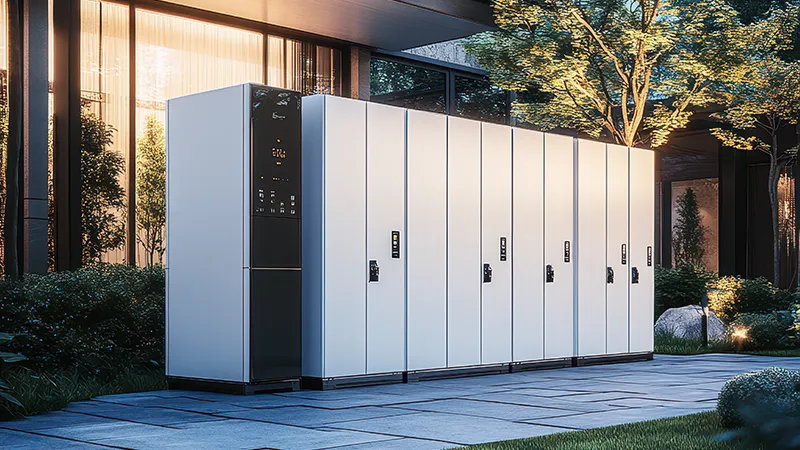
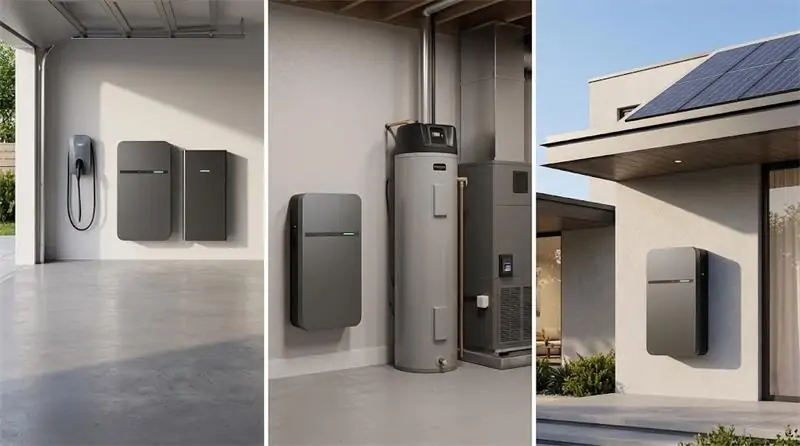
3.1 Breaking the “Industrial Box” Look
Traditional energy storage equipment often looks like industrial machinery: large cabinets, exposed technical details, and a design language created primarily around function.
But residential energy storage is installed in real homes.
It may sit inside a garage next to an electric vehicle. It may be installed in a basement next to household equipment. It may be placed near a modern villa where homeowners care about the appearance of every visible device.
That means the next generation of Home BESS needs to consider both electrical engineering and residential design.
A well-designed energy storage system should visually integrate with the environment instead of feeling like an industrial cabinet that has simply been moved into a house.
This is especially important for premium residential projects, where homeowners increasingly expect technology to become part of the architecture rather than interrupt it.
3.2 Parameter Labels: Make the Important Numbers Visible
One of the simplest ways to improve product selection is to make the most important specifications immediately visible.
Instead of forcing users to read a long technical datasheet first, a modern product interface can highlight key parameters through clear visual labels.
Battery Capacity: 7.68–15.36 kWh
Rated Output Power: 6.2 kW
Maximum Efficiency: Up to 98%
Backup Switching: <10 ms
The purpose is simple: let users understand the basic capability of a system within seconds.
For example, a homeowner may not immediately understand what a 10 kWh battery means. But if the interface also explains which household loads it can support and for approximately how long under a specific load profile, the information becomes much easier to understand.
3.3 From Technical Specifications to Real Household Loads
This is where residential energy storage product presentation can become significantly more useful.
Instead of showing only:
10 kWh Battery
a more user-oriented interface can show:
- Refrigerator
- Wi-Fi router
- Lighting
- Security system
- Television
- Home office equipment
- Selected heating or cooling loads
The system can then help users understand the relationship between capacity, power demand, and backup duration.
This does not replace professional system design. Instead, it makes the first stage of product selection easier for homeowners and gives installers a clearer starting point for system configuration.
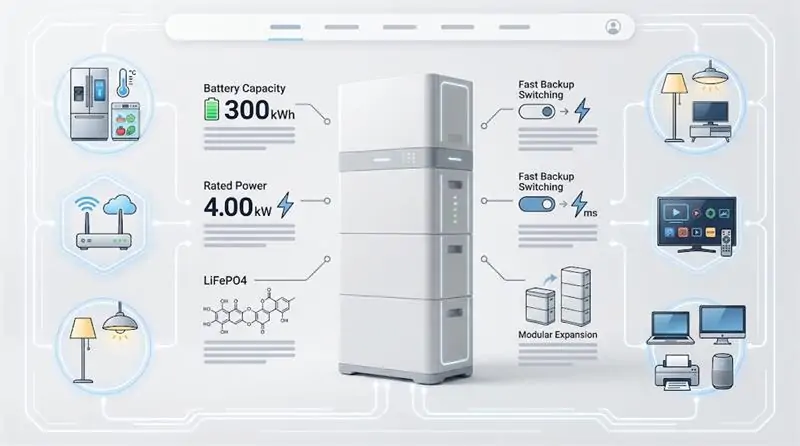
3.4 Modular Expansion: Build the System Around the Home
Household electricity demand does not always stay the same.
A family may start with a small solar system and later add an electric vehicle. A home office may become a larger workspace. A heat pump may be installed. Additional solar panels may be added.
That is why Modular Expansion is increasingly important in residential energy storage.
Instead of purchasing an oversized battery on day one, homeowners can select a suitable starting configuration and expand the system when their energy requirements increase, provided that the specific product architecture supports parallel operation and capacity expansion.
This creates a more flexible “build as you grow” approach to home energy storage.
In simple terms:
Start with what you need today. Expand when your home needs more energy tomorrow.
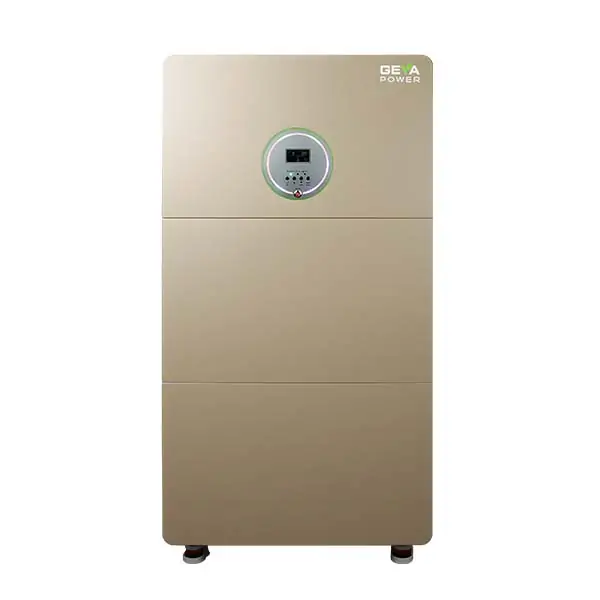
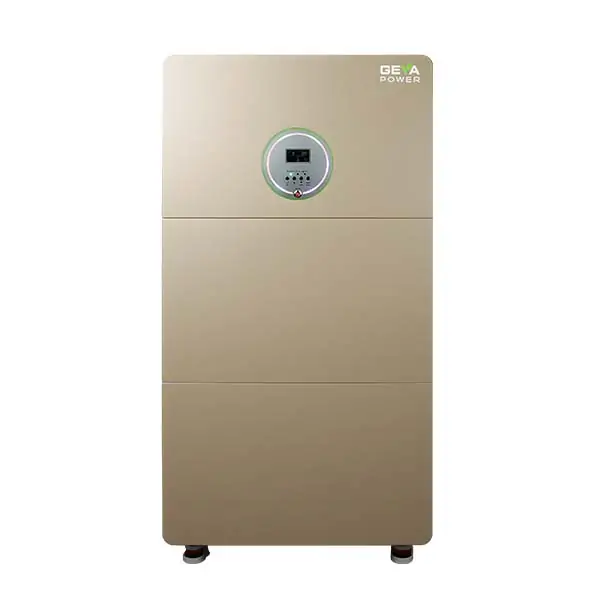
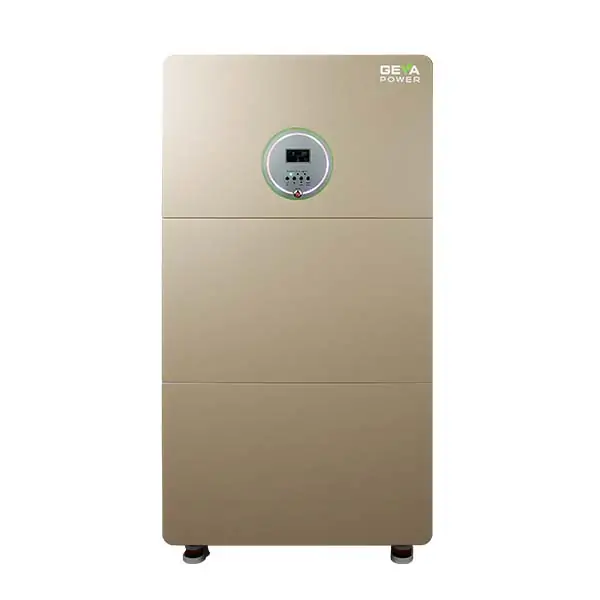
GEYA residential energy storage products already include flexible capacity configurations and expandable system architectures. For example, the GYS 6K all-in-one hybrid inverter is available with 7.68 kWh, 10.24 kWh, and 15.36 kWh battery capacity options and supports parallel operation for system expansion.
Learn more about the GEYA GYS 6K All-in-One Hybrid Inverter
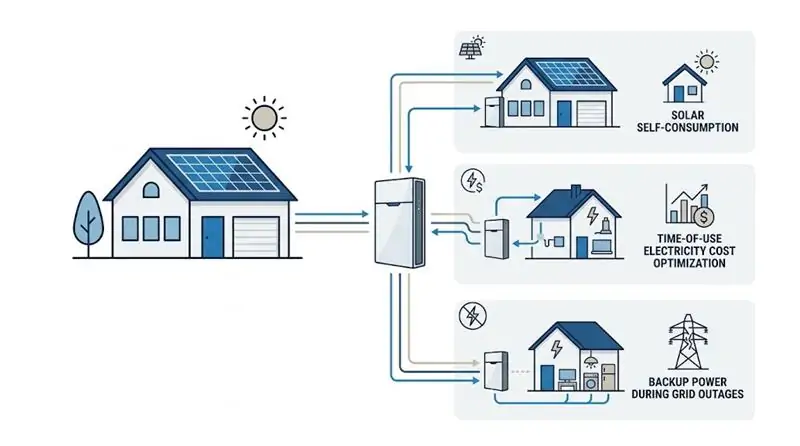
4. Three Operating Modes: How a Residential BESS Creates Real Value
4.1 Self-Consumption: Use More of Your Own Solar Energy
The first operating strategy is Self-consumption.
During sunny hours, solar panels may produce more electricity than the home is currently consuming. Instead of allowing all excess energy to leave the property, the energy storage system can charge the battery.
When solar generation decreases, the stored energy can then be used to supply household loads.
The basic energy flow looks like this:
Solar → Home Loads → Battery Storage → Home Loads
This strategy is particularly useful for homeowners who want to increase the percentage of their solar generation that is consumed on-site.
4.2 Time-of-Use: Store Energy When It Makes Economic Sense
In areas with Time-of-Use (TOU) electricity pricing, the price of electricity can vary depending on the time of day.
A smart energy storage system can charge during lower-cost periods and discharge during higher-cost periods, subject to the utility tariff, system configuration, and applicable regulations.
The concept is straightforward:
Charge when energy is cheaper → Store it → Use it when electricity is more expensive.
This turns the battery into more than a backup device. It becomes an active part of the household energy management strategy.
4.3 Backup Power: Keep Essential Loads Running During an Outage
Backup power is one of the most visible benefits of residential BESS.
When the utility grid fails, a properly configured system can automatically transition to backup operation and continue supplying selected loads.
For systems designed for fast backup switching, the transition can be measured in milliseconds. GEYA’s current Home Energy Storage System category specifies <10 ms fast switching for its UPS-grade backup configuration.
This can help maintain power to critical household equipment such as:
- Refrigerators
- Wi-Fi routers
- Security systems
- Lighting
- Home office equipment
- Selected medical or essential devices, subject to professional system design
However, backup performance should always be evaluated according to the actual inverter rating, battery capacity, supported loads, transfer characteristics, and installation configuration.
5. How to Choose the Right Residential Energy Storage System
Choosing a home battery should not begin with the question:
“How many kWh should I buy?”
A better approach is to start with how the home actually uses electricity.
Step 1: Understand Your Daily Energy Consumption
Review your electricity bills and identify your average daily consumption.
For a more accurate design, installers should also examine seasonal electricity demand because heating, cooling, and other high-power loads can dramatically change household consumption throughout the year.
Step 2: Identify Critical Backup Loads
Make a list of the appliances that must continue operating during an outage.
Not every household needs the battery to power the entire home. A carefully selected critical-load panel can often provide a more practical and cost-effective backup strategy.
Step 3: Compare Power and Energy Separately
This is one of the most important concepts in battery selection.
kWh describes energy capacity.
kW describes power output.
A battery may have enough total energy but still be unable to support a high-power appliance if the inverter’s output power is insufficient.
Therefore, both parameters must be evaluated together.
Step 4: Consider Future Expansion
Ask how your household may change over the next five to ten years.
Will you add an EV charger? More solar panels? A heat pump? More home-office equipment?
If the answer is yes, a modular residential BESS can provide more flexibility than a fixed-capacity system.
Step 5: Evaluate the Complete System, Not Just the Battery
A residential BESS is more than a battery pack.
The overall system may include:
- LiFePO4 battery cells
- Battery Management System (BMS)
- Hybrid inverter
- MPPT solar controller
- Energy Management System (EMS)
- Monitoring and communication system
- Protection devices
- Backup switching equipment
For example, GEYA’s residential product architecture integrates battery storage, hybrid inverter and MPPT functions into an all-in-one design, while smart monitoring allows users to view system status and energy information remotely.
Explore GEYA Home Energy Storage Systems
6. The Long-Term Value of a Modern Home BESS
The value of residential energy storage should not be measured only by the purchase price of the battery.
A better evaluation considers the complete lifecycle of the system.
- Energy savings: Greater use of stored solar energy and potential TOU optimization.
- Energy independence: Reduced dependence on the grid for selected household loads.
- Backup resilience: Continued operation of critical loads during grid interruptions.
- Long service life: High-quality LiFePO4 cells and appropriate battery management can support long-term operation.
- Future flexibility: Modular expansion can allow the system to grow with household energy demand.
- Smart management: Monitoring and EMS functions can make energy production, storage, and consumption easier to manage.
The actual return on investment depends on many variables, including local electricity rates, solar generation, battery cost, incentives, financing, utility rules, system efficiency, operating strategy, and household consumption patterns.
For this reason, there is no single payback period that applies to every home.
The right approach is to calculate the system according to the specific home’s energy profile.
7. The Future of Residential BESS Is Not Just More Battery Capacity
The residential energy storage market is moving toward a more complete definition of the product.
Tomorrow’s home battery will not simply be a box containing lithium cells.
It will be an integrated energy platform combining:
- Safe battery chemistry
- Intelligent BMS protection
- Smart energy management
- Fast backup switching
- Flexible modular expansion
- Clear product information
- Home-friendly industrial design
Most importantly, the way the system is presented should evolve together with the hardware.
Homeowners should not need an engineering degree to understand the basic capabilities of a residential energy storage system.
They should be able to quickly answer three questions:
How much energy can it store?
What can it power?
How can it grow with my home?
That is the direction in which modern residential BESS design is heading.
8. Conclusion: Build a Smarter Energy Future for Your Home
A modern Residential Energy Storage System should do more than store electricity.
It should help homeowners use solar energy more effectively, manage electricity costs more intelligently, maintain essential power during grid outages, and adapt to changing household energy needs.
At the hardware level, that means reliable Grade A LiFePO4 cells, intelligent BMS protection, low-temperature heating, high energy conversion efficiency, and long-cycle performance.
At the user-experience level, it means clearer specifications, scenario-based product selection, intuitive capacity information, and modular expansion.
And at the system level, it means combining Self-consumption, Time-of-Use energy management, and fast backup power into one intelligent residential energy strategy.
Whether you are a homeowner planning a solar-plus-storage system or a distributor and installer looking for a flexible residential BESS platform, the right solution should begin with your actual energy needs.
Explore the latest GEYA Home Energy Storage System solutions and find the configuration that fits your energy requirements.
Explore Home Energy Storage Systems
Need help selecting the right capacity, power rating, or backup configuration? Contact GEYA for a customized residential energy storage solution.